![]() |
| Acorn Woodpecker |
![]() |
| Rivoli's Hummingbird. One of the only lifers I've seen before putting my glasses on |
![]() |
| Violet-crowned Hummingbird |
![]() |
| Painted Redstart |
![]() |
| Arizona Woodpecker |
![]() |
| Red-faced Warbler |
![]() |
![]() |
| Acorn Woodpecker |
![]() |
| Rivoli's Hummingbird. One of the only lifers I've seen before putting my glasses on |
![]() |
| Violet-crowned Hummingbird |
![]() |
| Painted Redstart |
![]() |
| Arizona Woodpecker |
![]() |
| Red-faced Warbler |
![]() |
The first and only pelagic I've done was out of this world, seeing storm-petrels, albatrosses, and shearwaters that I only thought I would get to see in field guides. Hyped was an understatement, but I was very nervous. Pelagic trips are long and if there are big swells you're in for a rough day. My Westport trip was supposedly the calmest seas ever, so I was prepping for a tough day. I arrived and checked in, only to be told that swells were 1-2 feet aka the lowest they can be. Let's go! All that worry over nothing...
The overcast morning was serene, and the it was way cooler than I expected, I'm very glad I turned around for my jacket on my way to the airport. Sea lion pups were frolicking in the water and Western Gulls were already following our boat, it was going to be a good day!
![]() |
| Western Gull |
![]() |
| Scripps's Murrelet |
Eventually we got much better looks at the storm-petrel, but once we got further offshore the big kahuna hit. Murrelets flew across the bow in the distance, and despite being far away it was obvious what it was- SCRIPPS'S MURRELET! This was my most sought after bird of the trip, and it was one I have dreamed about for years. I used to know these as Xantus's Murrelet before it was split into Scripps's and Guadalupe, and it always struck me as a rare find in North America. It isn't, but back when my birding world was a triangle of Austin, Dallas, and Houston I thought I would never see these. And here I was, getting extremely cooperative views of one out of sight of land, almost across the border in Mexican waters. We would see tons of them, but each one was just as jaw dropping as the last.
As we got further offshore we started getting a following of birds. I really wanted to see the endangered Ashy Storm-petrel, but there aren't a ton of them and they can look very similar to Black. We would see very few of them, but I was able to get the ID down!
We reached The Corner, our furthest point offshore, where Mexico meets San Diego and Los Angeles County. This was over 30 miles offshore, and we were looking hard for the extremely rare Cook's Petrel. We would miss the petrel, but we got a Sabine's Gull! I saw these in Washington and was stunned by them, and I went crazy over them again. What will it take to get one at White Rock?
![]() |
| Black Storm-petrel |
At this point I was exhausted from all the excitement and I had to go lay down for a little bit, thinking it would be a little slow. Just as I was about to close my eyes, I heard "Northern Fulmar" over the speaker and shot up. Northern Fulmars are one of those seabirds that get me going, and they are very patient when it comes to boats. We got one within 20 feet of the boat, and I couldn't even use my binoculars on it. We thankfully stayed on it for 15 minutes before we decided to continue on. I laid down again, only to spring to my feet again when a Black-vented Shearwater, a lifer, began flying around the boat. That was the jolt I needed, no way could I sleep with so many good birds out!
![]() |
| Northern Fulmar |
The rest of the day was mostly the same awesome birds, but as we were heading in we got one last surprise, one of my favorite alcids, a Rhinoceros Auklet! A rare find in this area, it gave us the energy we needed after being on the boat for over 10 hours to finish the day. You never know what you'll get on the ocean, and that was a hell of a way to finish the day.
On Sunday I had a little free time and walked to Marston Canyon from Daniel's apartment. The weather was nasty and horrible for birding, but I was at lifer #498 and I had to get to 500! In the driving rain I would get it, Pacific Slope Flycatcher was 499 and Nuttall's Woodpecker was 500, just in time for me to rush off to lunch and get out of the rain. Marston Canyon has a ton of birding potential, the weather just sucked. Still, I had Warbling Vireo, Anna's Hummingbird, and an Allen's Hummingbird in such a short time. I also gained a new nemesis- Hooded Oriole. I can't find that bird anywhere, despite being in perfect habitat for it.
![]() |
| A pod of Rizzo's Dolphins, a rare find |
![]() |
| Fort Jefferson, Dry Tortugas National Park |
![]() |
| Gray Kingbird at Biscayne NP |
![]() |
| Black-throated Blue Warbler |
![]() |
| Black-and-white Warbler |
![]() |
| Brown Noddy |
![]() |
| Sooty Terns |
![]() |
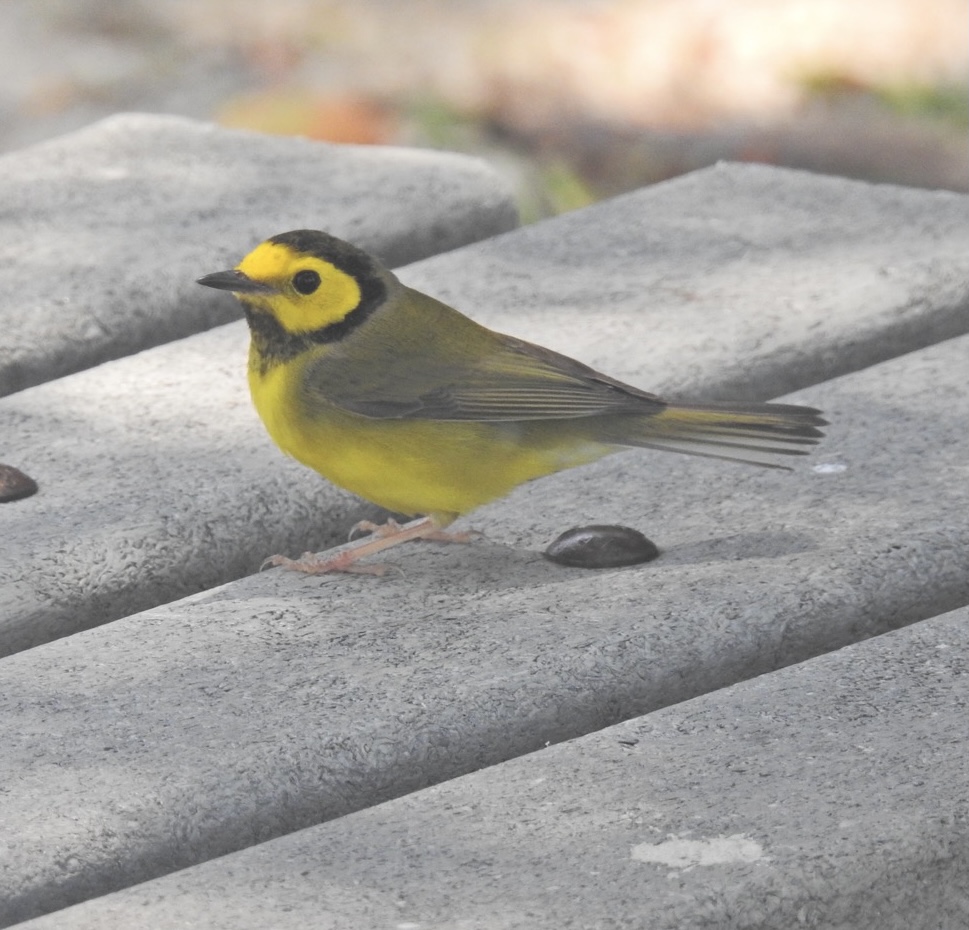
| Hooded Warbler |
![]() |
| Summer Tanager, Christina's favorite |
![]() |
| Scarlet Tanager |
Most of my recent birding has been pretty local. I had an excellent experience with a Barred Owl at White Rock, but other than that it was the usual suspects. I leave this weekend on a much anticipated trip to all 3 national parks in south Florida, and in my excitement I had to get out and chase something. I was able to convince some friends, Alex Curry and Luke Curran to join me for a morning of looking for Golden-cheeked Warblers.
Dinosaur Valley is one of my favorite state parks, and it is criminally underrated. The hiking is spectacular and I consider Limestone Ridge and Denio Creek to be a top 5 hike in the state. There are also dinosaur tracks in the Paluxy River, which is also great to swim in. To top it all off Golden-cheeked Warblers nest there. I've seen these stunning birds before, but every year I have an itch to see them. They're the only bird that exclusively nests in Texas, and they're endangered. They're the perfect birds to go after around this time of year when you're antsy waiting on warbler migration to pick up.
![]() |
| Golden-cheeked Warbler |
We arrived around 8:30 and it was way colder than I was hoping it would be, but while we waited for it to warm up we looked at the main track site in the river. The water was surprisingly not cold and we got clear views at tracks that were over 100 million years old! One dinosaur was hunting another when they left this tracks. We didn't have time for the ballroom site, but that is another must see.
We crossed the Pauluxy again and started our ascent up Limestone Ridge. The elevation is not significant, but it's interesting to see how the vegetation changes in about 100 feet. The lower elevations reminded Luke and I of the Chisos mountains where there is a lot of oak and denser vegetation. Once we got to the higher elevations it opened up a lot more, with Ashe Juniper being the dominant tree. This was the habitat we wanted to be in, as this is perfect for breeding GCWA.
![]() |
| Northern Cardinal |
Once we got into the habitat we were immediately greeted by a singing Black-and-white Warbler, which was extremely interesting until a Golden-cheeked erupted in song. While not tall, the trees were dense which prevented us from seeing it. We continued on, occasionally hearing more calling. As we rounded a turn near a "peak" we heard a loud Black-and-white, which we all stopped to look for. The area around us exploded with various bird calls. Blue-gray Gnatcatchers became visible and a Golden-cheeked started calling right in front of us. All we could see was the branches moving, and another one sang over our heads. As we scrambled to look it darted out right in front of us. Only Alex saw it, but he definitely got eyes on it.
Bird calls can be really tough to locate because the calls seem to echo off of rocks and trees. As we approached the overlook we heard another one loudly call, it was right on top of us. Alex had a hunch to go up the trail and he was right. The call got louder and we were temporarily distracted by a Black-chinned Hummingbird. But we committed a cardinal sin of birding: we completely lost interest in a hummingbird. We had good reason to, because a Golden-cheeked was singing right above us.
![]() |
| Lark Sparrow |
We had a total of at least 3 on the ridge, and the view of each one was better than a last. They were extremely active in the one tree that gave us the perfect view. They jumped around the exposed branches of an Ashe Juniper with the light behind us for about 20 minutes. Slack-jawed awe is probably the most accurate description of the feeling, and it was one of those unforgettable birding moments.
We didn't have many other species as we completed the last half of the hike, but that's to be expected. What this park lacks in diversity it makes up for in species quality. It was also nice to just enjoy a hike with friends on a beautiful spring day. Even if you aren't birding, Limestone Ridge, Denio Creek, and Black-capped Vireo trails are stunning, and you have to stop and periodically and enjoy the clear water beneath you. We finished our day in the quaint downtown Glen Rose where we dined on excellent burgers and pie at the Green Pickle and Pie Peddlers.
The park and Glen Rose are a perfect day trip. Luke and Alex should definitely keep joining me on birding trips if they can deliver more birding magic. To say I'm excited for Florida would be a massive understatement.
![]() |
| White-breasted Nuthatch |
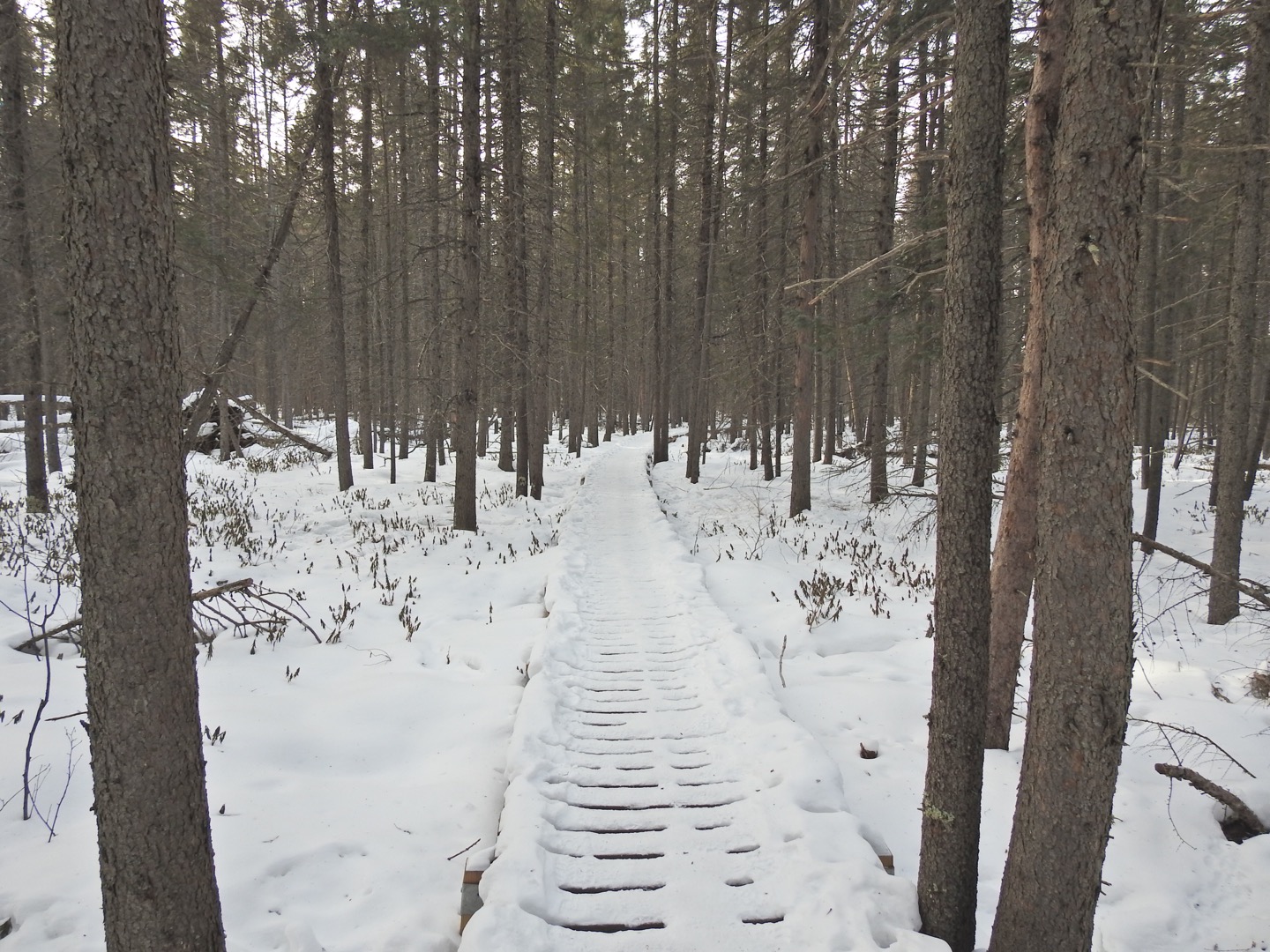
| Woessner Bog Walk |
![]() |
| Pine Grosbeak |
![]() |
| Gray Jay Way. There has to be Boreal Chickadees in those trees! |
![]() |
| Boreal Chickadee |
| Northern Hawk Owl. Sniped from a distance. |
![]() |
| The Common Redpoll that I really wanted to be a Hoary. There's too much streaking on the flank, though |
![]() |
| Canada Jay |
| Great Gray Owl, bird of the trip |
| Canada Jay and Pine Grosbeak |
| Evening Grosbeaks at Mary Lou's feeders |
Let's rewind to December 29, 2020. I finally have an opportunity to chase the Spotted Rail at Choke Canyon State Park. But there was an issue, the weather was supposed to be awful. Do I risk it or do I stay put? A 5.5 hour drive in the dark and rain seemed like a bad idea, so I stayed in Dallas. And I am very thankful for that. I had a really bad feeling leading up to the trip, and my gut was right. It was cold and rainy all day, and driving home from work (at the same time I would have been on the road) I got a flat tire that I would not have wanted to deal with on a rural road at night.
Fast forward to January 16, 2021. I'm moved in to my condo, my car has new wheels, it's a long weekend, and the weather could not be better. Let's get on the road!
"Why?" - most non-birders when I tell them what I'm doing. "5.5 hours? For a bird? That doesn't seem worth it." Of course, they're incorrect with that statement. It isn't just a bird, this is a Spotted Rail we're talking about. An ABA code 5 rarity, this would be the rarest bird I've seen in North America (although strangely not the rarest bird to Texas with the White Wagtail being a first state record). This is the 4th ABA record of the bird and the 3rd Texas record, although the first chaseable record of this bird. The first two specimens were dead birds found in Pennsylvania and Brown County, TX and the third was a Houston area record that was turned into a wildlife rehabber and never seen again.
| Spotted Rail |
Rails are an interesting family of birds. American Coots and Common and Purple Gallinules are related and are the most likely to be seen, but I have also had solid luck with Sora and Clapper Rail. They are notoriously hard to see due to their habitat and habits. They live in marshy areas and love to hide, so good luck seeing them. It's my understanding that the ABA allowed counting heard-only birds partially to stop people front tramping over habitat of Black and Yellow Rail. Little is known about them due to their elusive nature, but it is known that Veracruz, Mexico and Cuba are about as far north as the bird gets. But rails are known to wander hundreds of miles away from their normal range.
Long story short, the odds of another one turning up are very low, so you better better not waste the chance to see one.
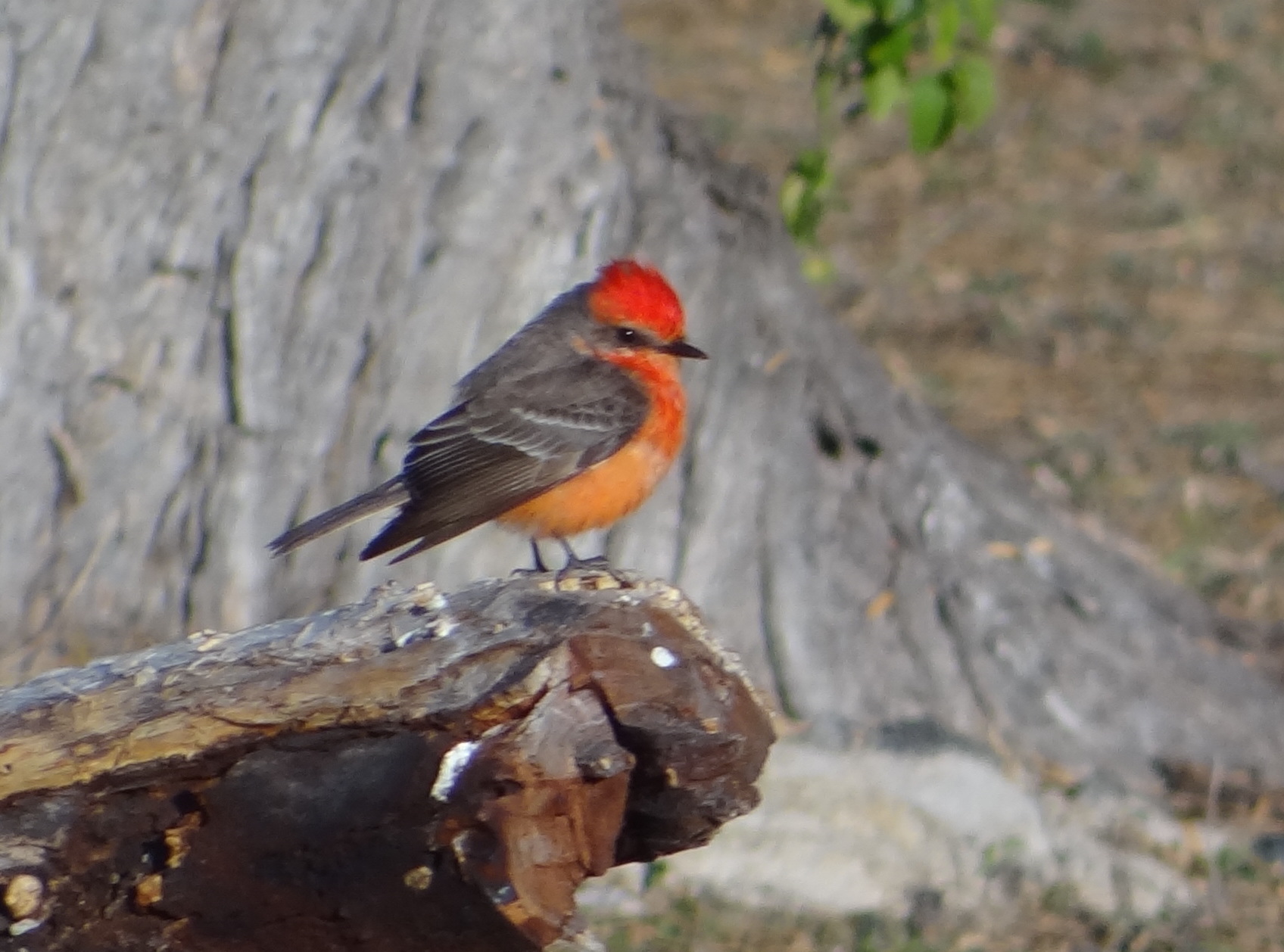
| Vermillion Flycatcher |
After a night of staying with friend of the blog Anthony, I woke up early to make the remaining 2.5 hour drive to Choke Canyon. The weather was perfect and I knew it was going to be a good day from the moment I entered the park. This is on the far north end of the range of south Texas specialty birds, so within seconds I had a Great Kiskadee and Long-billed Thrasher. Upon parking I had great looks at a Vermillion Flycatcher and Green Jays were squawking in the trees behind me. Let's do this.
| Yellow-rumped Warbler |
There wasn't much to do, within seconds of walking up I had views of the Spotted Rail running between clumps of cattails! Getting a picture was very difficult, as the rail was usually visible for just a few seconds at a time. Those few seconds were outstanding, though. Whoever found this bird deserves heaps of praise because it could be so hard to find. They walk very low to the ground, and we couldn't even see it move. But eventually we got excellent looks at it, and the light was perfect to allow for outstanding views with no shadows.
| One of the few times it was cooperative |
After an hour of admiring the bird it was time to look for others. Although I would not see them, Hook-billed Kite, Long-tailed Duck, Black-throated Gray Warbler, and Anna's Hummingbird had also been reported, as well as a host of other birds that I rarely get to see.
My walk down Hawk Alley was extremely productive. Audubon's Oriole and Verdin were highlights, but they didn't steal the show. That spot was deserved for Common Paraque, and this was the first time I saw one without having someone point it out! I'm cheating because I saw briefly in flight, but (shocker) I couldn't relocate it when it settled down. A calling Dickcissel was unusual and out of season.
| Common Paraque taken at Estero Llano Grade State Park |
I returned to 75 Acre Lake to scan for the Long-tailed Duck and Hook-billed Kite, but neither materialized, although Sora and Cinnamon Teal were nice consolations. By now I was running out of time, and I still had about 6 hours between me and Dallas. I made one pass at the Black-throated Gray warbler spot and came up empty, but I did get an Olive Sparrow that was very cooperative.
| Say's Phoebe |
By now it was 1:00, I had to go. But I can safely say I will be back. Choke Canyon's Calliham unit is very small, but it packs an insane birding punch and rare birds frequently turn up here. I was there 4.5 hours and didn't even bird the whole park and I had 70 species. You better believe celebratory Czech Stop was consumed on my way home.
Mid-December wound up being full of great birding opportunities. This year has seen an irruption of finches as they disperse south due to low conifer seeds in northern forests. Evening Grosbeaks, Pinyon Jays, and even a Clark's Nutcracker have shown up in Texas, and birds like Mountain Bluebird, Pine Siskin, and Western Bluebird have spread out in greater numbers across the state.
Another bird that has swarmed Texas is Purple Finch, and a rare wintering bird that is usually only found in east Texas and even then it is uncommon. This year they have been way more common, showing up farther south and farther west, including White Rock Lake. But Purple Finches being more common overlapped with another opportunity: Christina has never been camping as an adult and this was an opportunity to turn her into a camper and a birder! I also wanted to try for Brown-headed Nuthatch, #1 on my nemesis list now that I have Magnificent Frigatebird checked.
We started out on the Blackjack Trail, which had great sparrow habitat. White-throated Sparrow was abundant and we got great looks at Chipping and Field Sparrow as well. American Goldfinches were common as well. After quickly finishing the short trail we started Loop A, which took us through us through excellent pineywoods, which had to have Brown-headed Nuthatch, right?
| White-throated Sparrow |
Loop A is a 2.5 mile trail that winds through excellent forest that was very active. Cedar Waxwings were everywhere, as were Carolina Chickadees. I checked every Eastern Bluebird in hopes that I could get a Western, but no luck. Woodpeckers were also very active, and we got 5 species. My alarm clock in the morning was a loud Pileated Woodpecker, and Downy Woodpecker could be heard all down the trail. I never saw a Hairy, but they do get frequently reported there. We got a view of a Pine Warbler and a few vocalized which got us pretty excited, and an elusive Brown Creeper was climbing a tall Pine.
I kept watching the trees for signs of Brown-headed Nuthatch, and I finally saw some movement! It was absolutely a nuthatch, and when I finally IDed it was...a White-breasted Nuthatch. We saw tons of them, but never their Brown-headed brethern. We would not see Purple Finch or Brown-headed Nuthatch, but there's no such thing as a bad day in the woods so it wasn't a big deal!
Our last trail was took us all around the lakeshore at around 2 miles. Due to the time and increased activity the birds were scarce in general, although along the dam there looks to be excellent vantage points to look for birds higher up in the trees. We did have Pied-billed Grebes and Ruddy Ducks on the lake, although there was not much else. Tyler State Park is an excellent blend of birding and hiking, and I will for sure be making a return visit.
| Pied-billed Grebe |
There was also major excitement surrounding local rarities. For those unaware by now I am fascinated by animal populations and what causes them to move around, whether that is wandering temporarily or range expansion and contraction. Jaguars in northern Mexico/southern Arizona and Ocelots in south Texas are especially interesting, but it spills over to birds as well (I highly recommend Rare Birds of North America by Steve Howell, it will fascinate even the most uninterested birder).
Anyways, a rare bird palooza has unfolded in the DFW area. I was really pumped to chase a Surf Scoter in Irving until I got a notification that a White-winged Scoter was present in Frisco. White-winged Scoter is a little rarer than Surf Scoter, and with a small amount of time to bird I had to prioritize WWSC. And then another notification, Great-blacked Gull was seen in Denton, and someone later found 2 Iceland Gulls. You can't turn that down, but I was really going to be cutting it close with the A&M game starting at 11.
The birding 2 minute drill began. 1st and 10 on the 20. Christian's Subaru ran an out route along 635 to the tollway with minimal traffic, solid 10 yard gain. The defense showed blitz and we got risky calling a draw play, but it resulted in a hasty gain, gashing the defense for a long run to Frisco.
Things started looking a little dicey. I showed up to Phillips North Lake in a subdivision, expecting to see it on the small pond. After a quick scan, nothing but Lesser Scaup. Incomplete pass, second down. I hustled down to the main pond and looked across. Bufflehead and Greater Yellowlegs were cool finds, but not much. 3rd and 5. I rounded the smaller pond to see a larger duck in the flock of scaup. Somebody studied their birding film and knew this had potential. White wing patches were visible, WHITE-WINGED SCOTER! FIRST DOWN!
| White-winged Scoter |
Time was running out, and I called a comeback route as I headed southwest to Trinity Fork Park, where the Great Black-backed Gull had been spotted. I raced into the parking lot to find the gull had departed, but the two Iceland Gulls were there, as were a few Lesser Black-backed Gulls! I had potentially seen one at White Rock a few weeks prior, but I didn't count it because I wasn't certain. Now there was no doubt, the birds were massive but had dark shading around the eyes that separated them from the Herring Gulls around them. My last hope was the Railroad Street pond a half mile away.
4th and goal at the 5, make or break. GBBG is a TBRC review species, and this is the 63rd record in Texas, but it is almost exclusively found on the coast. This is the first DFW record, and only the fourth record of it not being found on the Texas coast, with 2 coming from Lake Meredith and one from Lake O' The Pines. You don't want to miss this one, and they are very hard to miss.
I pulled up to pond to find a few cars and scopes out. They told me it was on the pond, and it stuck out like a sore thumb. This gull is massive compared to other gulls, and it looked like a B-52 soaring over the water. We got it! Touchdown! After admiring for it a few minutes I had no time to spare, and I raced home to shower before making it to the game on time. 3 state birds and an Aggie win, it doesn't get any better than that!
I am shocked this trip happened. When Sydney was born, I expected about 2 years of not doing a birding focused trip, but I have a very suppo...