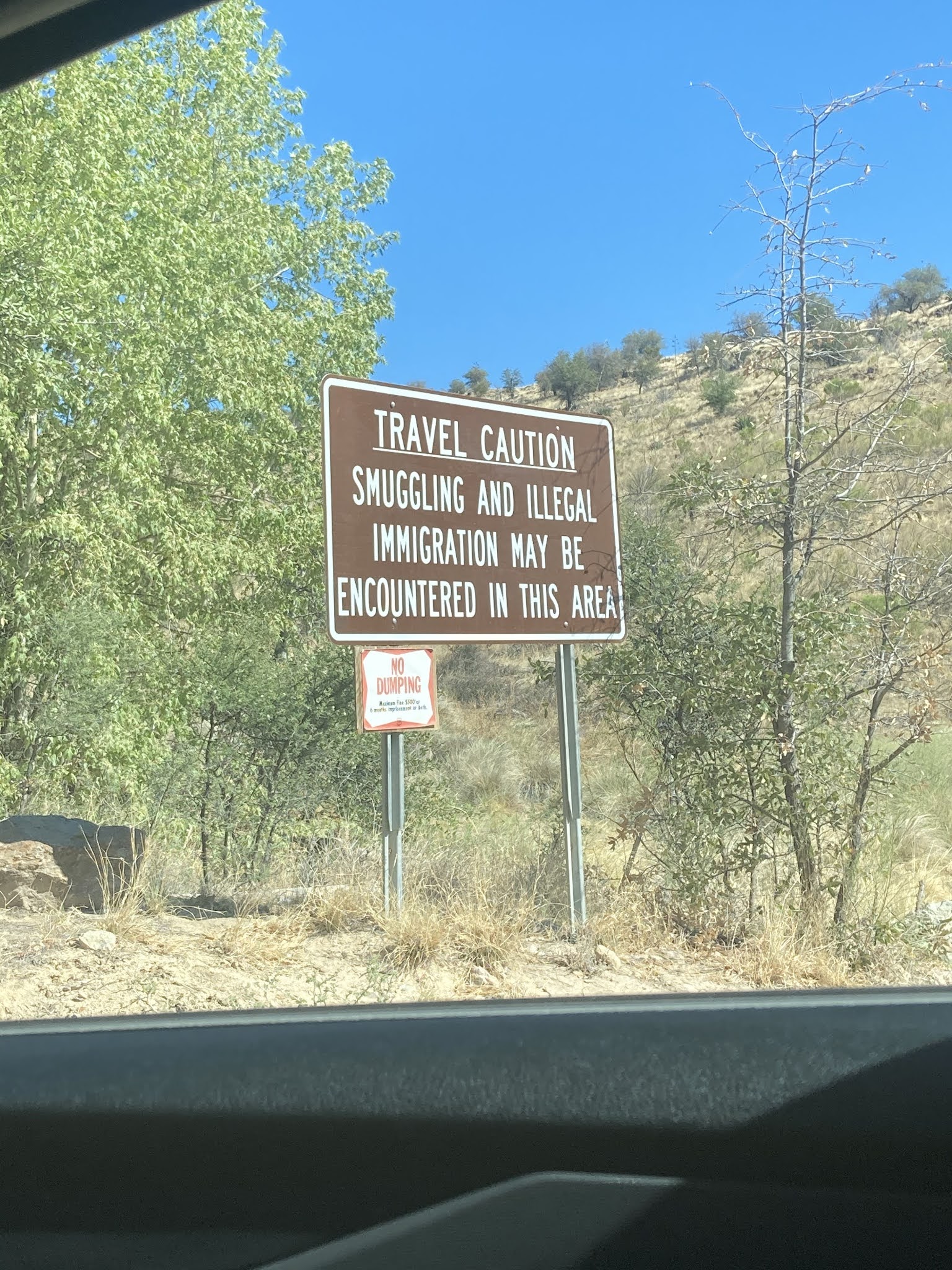
Friday, July 23, 2021

SE Arizona Part II


 How do you follow up the best birding day you've ever had? Of course, you try to follow it up with an even better day which is quite hard to do, but Miller Canyon gave me a chance to beat the prior day. Miller Canyon is also in the Huachucas and is closer to Mexico than Ramsey Canyon. It is also a very reliable spot for the Mexican subspecies of Spotted Owl, which is a prime candidate for a split in the future. In addition, Beatty's Guest Ranch is the only place in the country where you can find White-eared Hummingbird.

Black-throated Gray Warbler

I'll say it right off the bat: this morning was pretty disappointing. It was hotter than I thought because I was at a lower elevation, I was tired from the previous day, and I was SORE. It hurt to put a backpack on and look up with my sore neck, and my legs ached. I was also stressed about my afternoon plans, more on that in a bit. I was moving pretty slow. Still, there were awesome birds. My first lifer was a Black-throated Gray Warbler, which exceeded expectations. It was extremely cooperative. But after about 10 minutes on the trails things got eerily quiet. A predator was around. I quickly saw it and scared it. It was a Northern Goshawk! This was the only place I could expect to find one, so to get one in the first 30 minutes was really motivating. I saw it first in the forest and then it flew overhead. As is soared the woods came back to life.

Sulphur-bellied Flycatchers move fast, I'm just glad I got this picture

The Miller Canyon Trail is a beating, and I wasn't on it for long. It goes along a creek and like many other birders I'm sure I missed a quetzal or another insane bird by chickening out once things got hard, but I had a lot to try to accomplish today. Elegant Trogon had moved up to #1 ABA lifer after I got Red-faced Warbler, and Buff-breasted Flycatcher was my #2. This was one of the few places I could expect the latter in the United States, and this was my primary target.

Comforting

I could have sworn that I saw one! I was 99% sure, and after 30 minutes of watching I couldn't get a definite look at it as it was flying back and forth between tall trees. I desperately wanted to count it, but I didn't feel right doing it since I didn't confirm it. I was in this situation in the past with my lifer Painted Redstart in Big Bend in 2017 and once I saw it again later that year I felt way more comfortable ticking it. I had to find a way to confidently see it. 

Male Broad-billed Hummingbird

But I continued on to the spot where Spotted Owl is reliable, but no one had seen it that day. I knew my chances were slim since I am an awful owler, but I did great looks at Red-faced Warbler and Hepatic and Western Tanager. This is where things got stressful, I knew a place for automatic Buff-breasted Flycatcher but it was supposedly a very tough drive, but I also wanted to get to Patagonia to look for desert birds. Would I have enough time and was it worth it? I decided to gamble it.

I got out of the canyon rather quickly going downhill, and was greeted by a pair of cooperative Sulphur-bellied Flycatchers. A birder on the way up encouraged me to try the drive up Carr Canyon, so I decided that was what I was going to do after looking at the hummingbird feeders at Beatty's.

Broad-tailed Hummingbird

I arrived at the feeder station on the way to my car and watched an aerial show of squeaking hummingbirds. Broad-billed, Rivoli's, Anna's, and Broad-taileds were dazzling in the air. I used to think hummingbirds were overrated until I saw this spectacle. I thought I had photographed a White-eared, but when I got to the car it was not one. That was probably the lowest point of the trip. Dipping on Spotted Owl and White-eared Hummingbird sucked, but I was out of time. I had to leave if I was to get to Carr Canyon and Paton's.
The female Broad-billed that bamboozled me

The low point did not last very long, and in fact everything started looking up. The drive to Carr Canyon has been said by some people to be the scariest birding drive they've ever done, and that it is a white-knuckler. The 7 mile road is unpaved, extremely steep, full of narrow one lane switchbacks, and there were no guardrails. I was terrified at the thought of it, but I had to do it. When I solo travel I really try to go out of my comfort zone both physically and mentally, whether it's going out in -40 weather in Minnesota, Sourdough Mountain in the Cascades (that was both physically and mentally brutal), or driving up a really scary road. Besides, if I want to bird in foreign countries I will have to learn to deal with tough roads.

Lil bit of a squeeze

While I usually had plenty of room, that's a steep drop

While a challenge, the drive was not that bad on the way up. I had only a few moments or nerves, and overall it was worth it. Carr Canyon's Reef Townsite Campground is a fantastic place to get high elevation birds without the crippling hike. I got to ditch my backpack, which made things so much easier. The weather was cool and made for an easy, scenic walk. I got to get very close to Grace's and Black-throated Gray Warbler, the former of which I only previously got a glimpse of in Ramsey Canyon before a runner scared it off. I sat down on a pine tree and soaked in amazing views of each, and then my Buff-breasted Flycatcher flew in to view. Elated is an understatement, and I could confirm that what I saw in Miller Canyon was also a buff breast. But now I could rest easy knowing what I saw. I stuck around for a little while longer and got Yellow-eyed Junco. My most important takeaway from this: I need to camp at Reef Townsite next time. The campground is beautiful and I think this place is poppin with birds in the morning. 

Yellow-eyed Junco

Grace's Warbler

With little daylight left there wasn't a ton of time to spend at Paton's, which was fine considering I already had Violet-crowned Hummingbird. Still, this was a good sight for desert birds that I didn't have a chance to go after yet. It also was a great spot for Thick-billed Kingbird.

Phainopepla

Black-chinned Hummingbird

The yard is just that and not very big, but there is a garden and it packs quite a punch, even at the end of day. Lifer Abert's Towhee and Violet-crowned Hummingbird stole the show, but I also finally got my lifer Brown-crested Flycatcher and Lucy's Warbler. The feeders around the ponds were especially productive, and even a Zone-tailed Hawk flew over! Although it was too late to get Thick-billed Kingbird, Cassin's was there.

Gambel's Quail

Despite being exhausted it was time to drive to Madera Canyon!

Abert's Towhee

SE Arizona Part 1

Southeast Arizona had been hyped up to me as the best birding location in the United States, and it's easy to see why. The Sky Islands in the mountains southeast of Tucson host a variety of unique species of animals that can be found nowhere else in the United States, and offer amazing hiking opportunities. This was my dream birding trip, and the various mountain ranges gave me a chance to see my most sought after ABA birds like Elegant Trogon and Red-faced Warbler.
Acorn Woodpecker

I flew out the Friday before Memorial Day to take advantage of an extra day off, as well as cooler weather. I was wrong about the last part, after talking with people from the area they told me that time of year is actually hotter, while it cools off later in the summer. But being in the mountains I didn't notice, and the weather was very pleasant.

I wanted to prioritize the location I was most hyped about, Ramsey Canyon. Located less 10 miles from the Mexican border, this is a magnet for birds that just barely extend their range into the US. The canyon is great to bird because you can work your way up to higher elevations, giving you an opportunity to see more birds that specialize at different elevations. I stayed right below the canyon entrance at the Ramsey Canyon Inn, a renowned B&B with great feeders.
Rivoli's Hummingbird. One of the only lifers I've seen before putting my glasses on


I woke up before breakfast to the sound of birds I was unfamiliar with. My room overlooked the garden, and I was taken aback at all of the hummingbird activity. World class birds were right outside my window! I sat in the garden for about 20 minutes before eating, and picked some amazing lifers. I couldn't pick a favorite. My hummingbird knowledge isn't that extensive since I usually only get to see Black-chinned and Ruby-throated, so these feeders blew my mind. Of course the massive Rivoli's Hummingbird had me slack-jawed, I was blown away by the Broad-billed Hummingbirds. The surprise of the day was the bird of the session, a Violet-crowned Hummingbird. They are very rare in the United States, with the only reliable place being Paton's in Patagonia. This was also one of my top 5 ABA birds. It was an omen for the day.
Violet-crowned Hummingbird

After breakfast I began my hike up Ramsey Canyon. The trail is about 9 miles round trip from the parking and is pretty strenuous, but I've learned that strenuous means good birds. There is no easy bird, you either have to hike, drive, or deal with some level of discomfort (looking at you, Great Gray Owl) to get. From the get go I was seeing lifers like Hutton's and Plumbeous Vireo, and I was immediately in awe at the scenery around me. The clear blue sky, oak trees shading the trail, and calls of different birds really sweeps you away. Along the creek I had beautiful Painted Redstarts, a good motivator before I began my ascent. 
Painted Redstart

For the most part the hike is very pleasant outside of a few stretches, and the beginning ascent got to me, although Arizona Woodpeckers offered the perfect justification for a respite. I reached an overlook to stop for soaring White-throated Swifts, a bird I rarely get to see, and to soak in the views of the Huachuca Mountains. A loud and intense squeak shocked me, it was a pair of Sulphur-bellied Flycatchers! These are another one of my most sought after ABA birds.
Arizona Woodpecker

Activity picked up big time as I the trail followed the creek. Cordilleran Flycatchers were everywhere, and as I gained more elevation the birds I came for started appearing. I am not good with calls, but I knew warblers were above me. My #1 target bird, Red-faced Warbler, was the first one I saw. WOW, it looks so much better in person than field guides, and that should tell you something. Some lifers are better seen in their habitat, and this was the perfect example. The canyon walls, pine and oak trees, and smells of the forest was the best backdrop you could ask for. 
Red-faced Warbler

Within a few minutes I also had Grace's Warbler, another highly sought after target, as well as the facemelting Western Tanager. The creek was extremely productive and it was probably the best 15 minutes of birding of my birding career so far. It also was the perfect motivator for the most challenging part of the hike. The trail is pretty flat for most of the hike, but the end is insanely difficult. You're pretty much going uphill at all times, and as a result it's very hard to bird, although I did hear a lifer Mexican Whip-poor-will calling during the day. Getting to the top was worth it with the views of the valley and the desert, but it was a killer. 


On my way down I stopped multiple times to admire Red-faced Warblers, which are way easier to see on the way down since you look at them from above as they perch down the slope. I got killer warbler neck after this first day, but it was worth it. My traps looked shredded and I got my #1 ABA bird.  I was also more aware of my surroundings, so I got to see some birds I would have missed, like Hermit Thrush. But the star of my trip down was a pair of Yellow-eyed Juncos, another range restricted bird in the US that you can only find at high elevations. It was an incredible last lifer in the canyon, and the hike out was very enjoyable as I got to focus way more on the scenery around me. It's the best birding in the lower 48 (only behind Kenai Fjords and Denali, which nothing can compete with). On one trail I had Rivoli's Hummingbird, Sulphur-bellied Flycatcher, Red-faced Warbler, and Yellow-eyed Junco. It doesn't get better than that in the United States.

I ended the day by going to San Pedro RCNA to poke around, getting one more lifer in Gila Woodpecker. It was dead at the end of the day but still nice to be out. My final minutes of birding involved listening for owls in front of the inn, which paid off with an Elf Owl! I went to bed as early as I could after birding over 10 miles, ready to get after it the next day.


Friday, June 4, 2021

San Diego


A few weeks ago I went out to San Diego to see my best friend since second grade, and you know we have to go birding when we travel somewhere. Due to work and this crazy thing called hanging with my boy, I didn't want to get out every day. I'm sure Daniel and Jacqueline needed a break from me, so I spent all day one day on a pelagic trip. 

The first and only pelagic I've done was out of this world, seeing storm-petrels, albatrosses, and shearwaters that I only thought I would get to see in field guides. Hyped was an understatement, but I was very nervous. Pelagic trips are long and if there are big swells you're in for a rough day. My Westport trip was supposedly the calmest seas ever, so I was prepping for a tough day. I arrived and checked in, only to be told that swells were 1-2 feet aka the lowest they can be. Let's go! All that worry over nothing...

The overcast morning was serene, and the it was way cooler than I expected, I'm very glad I turned around for my jacket on my way to the airport. Sea lion pups were frolicking in the water and Western Gulls were already following our boat, it was going to be a good day!

Western Gull

My first lifer was seen before we even hit the open ocean, an Elegant Tern, which would be very common throughout the day. Sooty Shearwaters appeared on the horizon, and we would see them throughout the day as well. Red-necked Phalaropes were everywhere, and my next lifer was a distant Black Storm-petrel off in the distance, one that I was very excited about.

Scripps's Murrelet

Eventually we got much better looks at the storm-petrel, but once we got further offshore the big kahuna hit. Murrelets flew across the bow in the distance, and despite being far away it was obvious what it was- SCRIPPS'S MURRELET! This was my most sought after bird of the trip, and it was one I have dreamed about for years. I used to know these as Xantus's Murrelet before it was split into Scripps's and Guadalupe, and it always struck me as a rare find in North America. It isn't, but back when my birding world was a triangle of Austin, Dallas, and Houston I thought I would never see these. And here I was, getting extremely cooperative views of one out of sight of land, almost across the border in Mexican waters. We would see tons of them, but each one was just as jaw dropping as the last.                                                     

As we got further offshore we started getting a following of birds. I really wanted to see the endangered Ashy Storm-petrel, but there aren't a ton of them and they can look very similar to Black. We would see very few of them, but I was able to get the ID down! 

We reached The Corner, our furthest point offshore, where Mexico meets San Diego and Los Angeles County. This was over 30 miles offshore, and we were looking hard for the extremely rare Cook's Petrel. We would miss the petrel, but we got a Sabine's Gull! I saw these in Washington and was stunned by them, and I went crazy over them again. What will it take to get one at White Rock?

Black Storm-petrel

At this point I was exhausted from all the excitement and I had to go lay down for a little bit, thinking it would be a little slow. Just as I was about to close my eyes, I heard "Northern Fulmar" over the speaker and shot up. Northern Fulmars are one of those seabirds that get me going, and they are very patient when it comes to boats. We got one within 20 feet of the boat, and I couldn't even use my binoculars on it. We thankfully stayed on it for 15 minutes before we decided to continue on. I laid down again, only to spring to my feet again when a Black-vented Shearwater, a lifer, began flying around the boat. That was the jolt I needed, no way could I sleep with so many good birds out!

Northern Fulmar

The rest of the day was mostly the same awesome birds, but as we were heading in we got one last surprise, one of my favorite alcids, a Rhinoceros Auklet! A rare find in this area, it gave us the energy we needed after being on the boat for over 10 hours to finish the day. You never know what you'll get on the ocean, and that was a hell of a way to finish the day. 

On Sunday I had a little free time and walked to Marston Canyon from Daniel's apartment. The weather was nasty and horrible for birding, but I was at lifer #498 and I had to get to 500! In the driving rain I would get it, Pacific Slope Flycatcher was 499 and Nuttall's Woodpecker was 500, just in time for me to rush off to lunch and get out of the rain. Marston Canyon has a ton of birding potential, the weather just sucked. Still, I had Warbling Vireo, Anna's Hummingbird, and an Allen's Hummingbird in such a short time. I also gained a new nemesis- Hooded Oriole. I can't find that bird anywhere, despite being in perfect habitat for it.

A pod of Rizzo's Dolphins, a rare find


Friday, May 7, 2021

South Florida Birding


I have to get creative with PTO at work since I have 2 weeks, and an appetite for birding that takes more than 2 weeks to satisfy. Too many birds to see and not enough time to do it. With this creativity I hatched a very ambitious plan to see 3 national parks in a long weekend, and Christina and I left in late April to attempt it.
Fort Jefferson, Dry Tortugas National Park

Our first park was Biscayne. Most of the park is water, and there aren't a ton of birding opportunities. We booked a half day snorkel trip in the mangroves. The water was cool and clear, and we saw a ton of cool fish that I couldn't identify, although I could identify the barracuda that swam by us in four feet of water! We finished the tour on Elliot Key, where I got my first lifer of the trip, a Gray Kingbird! Cape May Warblers were abundant and we had a Prairie Warbler and female American Redstart. There was a likely cuckoo, which could have been a Mangrove, but the bird disappeared before I could take a look. It only could have been a cuckoo, but with 3 different kinds in the area I couldn't tell. Of all rarities a Cardinal got flagged. After we finished we headed to Key West, unsuccessfully stopping to chase the Black-faced Grassquit. We pretty much missed it because it was 6:30 PM, way too late to expect it show up, but we did get up close looks at a growling alligator and a male Black-throated Blue Warbler, which is a bird I always get excited for. 
Gray Kingbird at Biscayne NP


We stopped at the Marathon airport to look for one of my more sought after ABA birds, Antillean Nighthawk. The directions of where to be at the airport were a little unclear but we eventually got in the right place. The best way to compare Antillean to Common is by call. Antillean has a 4 note and common has a single note. I heard multiple commons, but one had 2 notes. One guy got a look at one and ended up reporting Antillean, and I would bet money he was right. With that said, I wasn't confident enough to count it, oh well.
Black-throated Blue Warbler

Swallow-tailed Kite

Saturday morning was the day Christina and I were most excited about, we were heading to Dry Tortugas National Park. This is another part that is almost exclusively water, but our 2.5 hour cruise would take us to Garden Key to visit the historic Fort Jefferson, where Dr. Samuel Mudd, the man who set John Wilkes Booth's broken leg after assassinating Abraham Lincoln, was imprisoned. The park also has incredible birding. The only nesting sites in the continental US for Magnificent Frigatebird, Sooty Tern, Brown Noddy, and Masked Booby are in the park, and the fort is very good for neotropical migrants heading north. 
Black-and-white Warbler

The first bird I saw on the ferry was a Brown Booby, a bird that will always get me excited. But the flying animal that really caught my eye was the flying fish, which we saw many of. I loved watching them jump out of the wake and fly into a wave. My first lifer was a Masked Booby on Hospital Key, where there is a breeding colony. Soon the Sooty Terns started showing up in force, and I'm sure there were a few Bridled Terns mixed in but they're very hard to separate and way rarer. Frigatebirds joined in, and then I let out a gasp when I saw my first Brown Noddy, my favorite bird of the day. 
Brown Noddy

Sooty Terns

Garden Key had a very busy feeling to it when we pulled up, mostly as a result of the colony of Sooty Terns that were breeding there. There were thousands of them and they were calling nonstop. It's such a simple, but amazing experience to see these nesting colonies, and we would come back to enjoy it later, but first we ran into the fort to see what migrants were present. I knew it was going to be a good day when a male Scarlet Tanager zipped by us, and the migration bonanza would lead from tree to tree. It was impossible to keep with each bird. We would be enjoying a Cape May warbler when out of the corner of our eye we'd see a Prairie Warbler, but before we could settle on it a Yellow Warbler would snag out attention. Magnificent Frigatebirds hovered overhead the whole time while Peregrine Falcons swopped between us. 
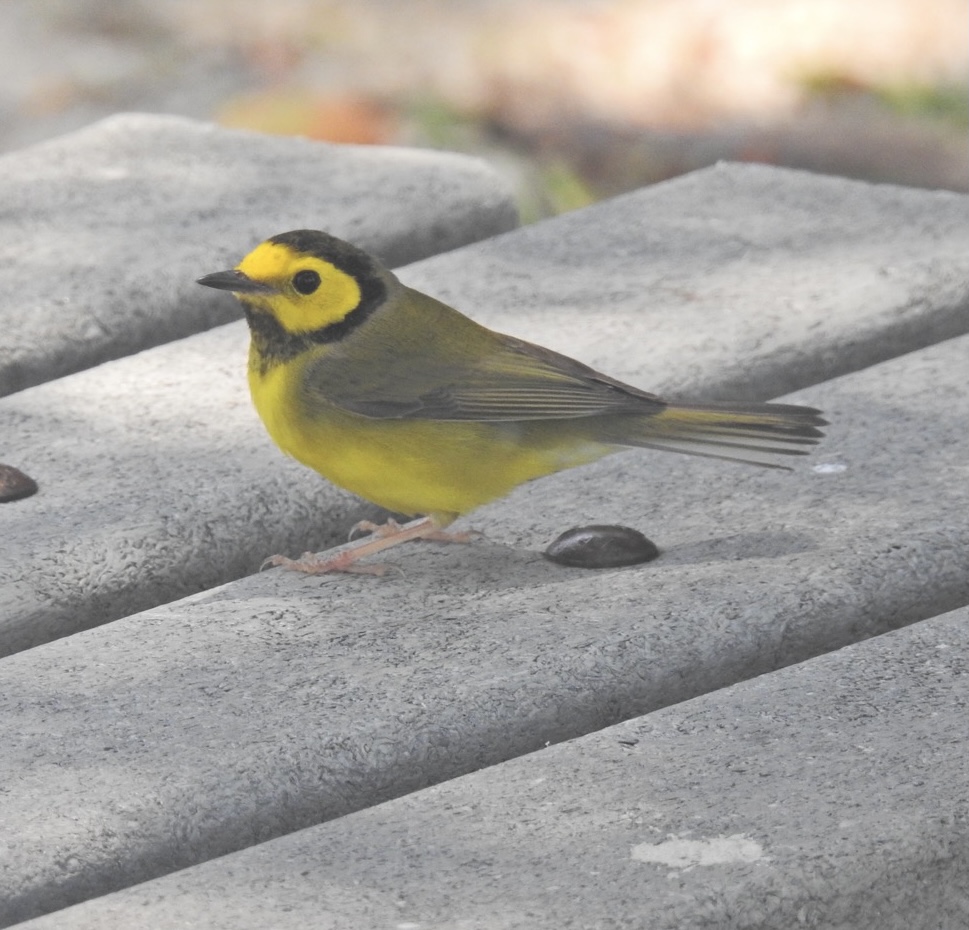
Hooded Warbler

After lunch we walked along the nesting tern colony and got within feet of Sooty Terns and Brown Noddies before walking along the top of the fort and enjoying views of the island and water. We had a race against time, though. With only four hours on the island we were forced to cram in birding, a walk up top, and snorkeling. We made one last run through the fort, getting a lifer Veery and Gray-cheeked Thrush. We got very excited over a cooperative juvenile Summer Tanager and a Hooded Warbler that hung out at our feet. The finale was the Scarlet Tanager reappearing and bathing in the water fountain, which were the best looks of that species that I've ever had. We had just enough time to get a snorkel in, which was very refreshing with the heat. Our underwater birding was extremely productive and we saw a barracuda, snappers, and sergeant majors. Once we got back we walked around Key West and got White-crowned Pigeon before returning to Homestead.
Summer Tanager, Christina's favorite

We spent our last day visiting the Everglades, but we didn't have a ton of time. Smooth-billed Ani was an ABA bird I desperately wanted, and it was seen for the last time about an hour before we got there. We met other birders there who also didn't see it, and that sighting would be the last report of it. We made the long drive to Flamingo to look for Shiny Cowbirds and primarily to see the crocodile and manatees. While we missed Shiny Cowbird, we did get the crocodile and the manatees got so close to us we could feel their exhales. We were in awe getting so close to these amazing animals.
Scarlet Tanager

The biggest takeaway from this trip was that it can't be done properly in 3 days. We had an incredible time but were frequently racing to our next destination. I can't wait to get back to back to South Florida to dive a little deeper, especially in Key West. There is so much to see down there, and coming back with longer life list made it more than worth the trip. May is gonna be a big month for birding, with Galveston migration this weekend, a San Diego pelagic next weekend, and SE Arizona over Memorial Day!

Thursday, April 22, 2021

Golden-cheeked Warblers in Dinosaur Valley State Park


Most of my recent birding has been pretty local. I had an excellent experience with a Barred Owl at White Rock, but other than that it was the usual suspects. I leave this weekend on a much anticipated trip to all 3 national parks in south Florida, and in my excitement I had to get out and chase something. I was able to convince some friends, Alex Curry and Luke Curran to join me for a morning of looking for Golden-cheeked Warblers. 

Dinosaur Valley is one of  my favorite state parks, and it is criminally underrated. The hiking is spectacular and I consider Limestone Ridge and Denio Creek to be a top 5 hike in the state. There are also dinosaur tracks in the Paluxy River, which is also great to swim in. To top it all off Golden-cheeked Warblers nest there. I've seen these stunning birds before, but every year I have an itch to see them. They're the only bird that exclusively nests in Texas, and they're endangered. They're the perfect birds to go after around this time of year when you're antsy waiting on warbler migration to pick up.

Golden-cheeked Warbler

We arrived around 8:30 and it was way colder than I was hoping it would be, but while we waited for it to warm up we looked at the main track site in the river. The water was surprisingly not cold and we got clear views at tracks that were over 100 million years old! One dinosaur was hunting another when they left this tracks. We didn't have time for the ballroom site, but that is another must see.

We crossed the Pauluxy again and started our ascent up Limestone Ridge. The elevation is not significant, but it's interesting to see how the vegetation changes in about 100 feet. The lower elevations reminded Luke and I of the Chisos mountains where there is a lot of oak and denser vegetation. Once we got to the higher elevations it opened up a lot more, with Ashe Juniper being the dominant tree. This was the habitat we wanted to be in, as this is perfect for breeding GCWA. 

Northern Cardinal

Once we got into the habitat we were immediately greeted by a singing Black-and-white Warbler, which was extremely interesting until a Golden-cheeked erupted in song. While not tall, the trees were dense which prevented us from seeing it. We continued on, occasionally hearing more calling. As we rounded a turn near a "peak" we heard a loud Black-and-white, which we all stopped to look for. The area around us exploded with various bird calls. Blue-gray Gnatcatchers became visible and a Golden-cheeked started calling right in front of us. All we could see was the branches moving, and another one sang over our heads. As we scrambled to look it darted out right in front of us. Only Alex saw it, but he definitely got eyes on it.

Bird calls can be really tough to locate because the calls seem to echo off of rocks and trees. As we approached the overlook we heard another one loudly call, it was right on top of us. Alex had a hunch to go up the trail and he was right. The call got louder and we were temporarily distracted by a Black-chinned Hummingbird. But we committed a cardinal sin of birding: we completely lost interest in a hummingbird. We had good reason to, because a Golden-cheeked was singing right above us. 

Lark Sparrow

We had a total of at least 3 on the ridge, and the view of each one was better than a last. They were extremely active in the one tree that gave us the perfect view. They jumped around the exposed branches of an Ashe Juniper with the light behind us for about 20 minutes. Slack-jawed awe is probably the most accurate description of the feeling, and it was one of those unforgettable birding moments.

We didn't have many other species as we completed the last half of the hike, but that's to be expected. What this park lacks in diversity it makes up for in species quality. It was also nice to just enjoy a hike with friends on a beautiful spring day. Even if you aren't birding, Limestone Ridge, Denio Creek, and Black-capped Vireo trails are stunning, and you have to stop and periodically and enjoy the clear water beneath you. We finished our day in the quaint downtown Glen Rose where we dined on excellent burgers and pie at the Green Pickle and Pie Peddlers. 

The park and Glen Rose are a perfect day trip. Luke and Alex should definitely keep joining me on birding trips if they can deliver more birding magic. To say I'm excited for Florida would be a massive understatement.

Sunday, February 21, 2021

Sax Zim Bog

There have always been birds in my field guides that I immediately make my peace about never seeing. Most of these cases in my North American field guide usually are northern birds that don't make it very far south. Gray-headed Chickadees, for example, are only found in the Alaskan wilderness that require bush planes, backpacking, and unreliable weather. But it turns out, I had a chance to see some of these birds if I was willing to face a few challenges.
White-breasted Nuthatch

The place to see some of them is the Sax Zim Bog, a 300 square mile area of bog and boreal forest about an hour north of Duluth, Minnesota. While it hosts a myriad of neotropical migrants in the summer, the main draws arrive in the winter. This is the most accessible site to see some of the hardest to find birds in the lower 48, like Hoary Redpoll, Northern Hawk Owl, and Boreal Chickadee. While not range restricted, this is also considered one of the best places to see Great Gray Owl as well. You just have to be willing to brave potentially frigid temperatures.
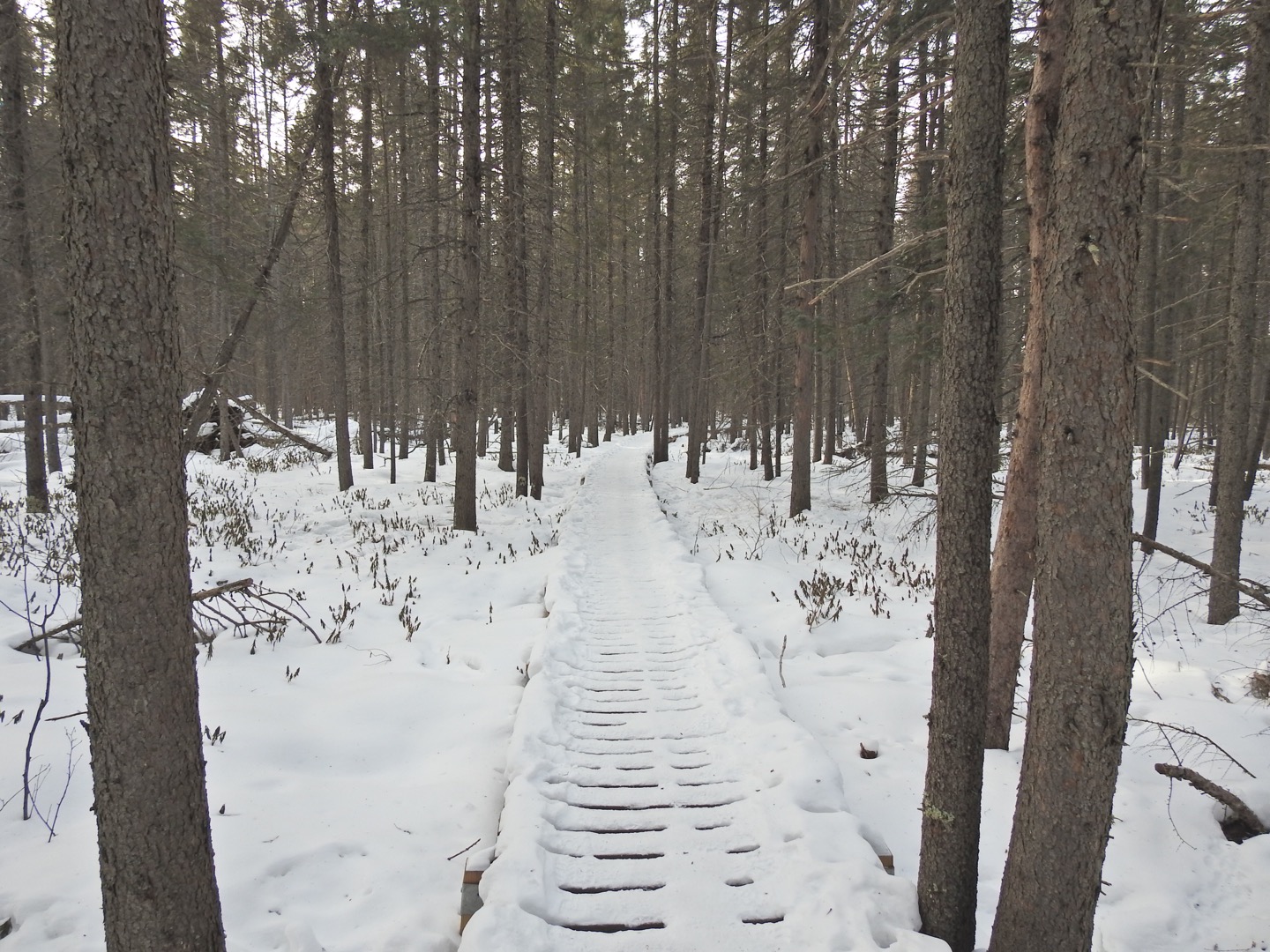
Woessner Bog Walk

Frigid turned out to be an understatement. I planned my trip for President's Day weekend, which happened to be during a polar vortex hitting the area. Lows were projected around -20, but that number inched lower and lower as my trip approached. Much to the chagrin of my family, I still decided to go.

The thermostat read -40. The coldest temperature I'd experienced prior to this was 15 degrees when I was in high school. My knees and face hurt, but the Admiral Road feeders, my first stop after searching for Great Gray Owl earlier in the morning, soon made me forget that pain. In front of me was my first lifer of the trip. There was not one, but a flock of Pine Grosbeaks, one of my more sought after birds. I looked for this stunning pink bird in Maine, Alaska, and Washington with no luck in the past. This was one of the birds that provided the inspiration to begin out of state travel, so to see these in person was an incredibly rewarding experience, and the serene snow covered ground and bright green spruce painted a perfect backdrop. I would return to the feeders multiple times throughout the weekend, and the Black-capped Chickadees, Canada Jays, and woodpeckers of the Hairy and Downy variety would never get old.
Pine Grosbeak

After that I went to the visitor center on Owl Avenue. I heard that this was one of the best places to find Boreal Chickadee, the bird I wanted to see most (I came into the trip not expecting to see Great Gray or Northern Hawk Owl). I immediately had another lifer upon arriving- Evening Grosbeak! A massive flock was swarming the feeders, and it almost hurt me to continue on my way. The cold definitely hurt, but I have wanted to see an Evening Grosbeak for years and it felt wrong to look to look away, even though there were other birds that had to be admired.
Evening Grosbeak

Walking down Gray Jay Way to was one of the more scenic part of the trip. Temperatures had warmed up considerably to around -10, which makes a big difference, and the trail of packed snow was lined by snow covered spruce and tamarack trees. Even though I wasn't far from civilization I got the same rush I felt when I was in Boot Canyon in Big Bend, or when Anthony and I hiked Thorofare Ridge in Denali. The majesty of the American outdoors was on full display. My short walk ended at a collection of feeders where there was already a small group of people waiting for the chickadee to show up. 
Gray Jay Way. There has to be Boreal Chickadees in those trees!

According to Sibley, Boreal Chickadee is usually more secretive compared to other chickadees, and as a result they very rarely will go to bird feeders. Except in winter. So while they do breed in Minnesota you are way less likely to be seen in more...pleasant weather. I looked for them in Alaska without luck, so deep winter was my best bet. My fingers were quickly going numb, but after about 20 minutes we heard a call! Shortly after, a brown headed chickadee appeared- BOREAL CHICKADEE! The bird offered excellent looks for a few minutes, and the next day I was able to see it in the same spot at the suet feeder on Sunday.
Boreal Chickadee

Before leaving I saw that a Northern Hawk Owl was being seen off of CR 7. I raced down and started scanning the tops of spruce trees. Northern Hawk Owl is extremely rare in the lower 48 even in winter (Duluth is on the far southern end of their winter range), so the opportunity to see one should not be passed up. I find owls very hard to find, but this owl luckily wasn't too hard thanks in part to its diurnal nature. A weird spec at the top of a spruce tree far off the road gave it away, and even though the views and pics weren't great you could clearly tell it was a Norther Hawk Owl! Bird of the trip so far!
Northern Hawk Owl. Sniped from a distance.

With the afternoon winding down I walked Yellow-bellied Bog. The feeders were full of Common Redpolls, a stunning winter finch that I only briefly saw in Alaska. Desperately trying to find a mixed in Hoary, I was thankful for extended looks of an entire group! Yellow-bellied Bog was one of my favorite walks because of the trees were sunk in snow but their branches covered the trail. After the brief walk I headed back towards the Admiral Road feeders where I would spend the remaining hour of daylight, where there were more redpolls. I thought I had Hoary but after submitting it to people who know more than me it was determined to be Common. At sunset I drove up and down CR 7 checking every clearing for Great Gray Owl, and someone saw one at a great distance, and it was gone before anyone else got eyes on it.
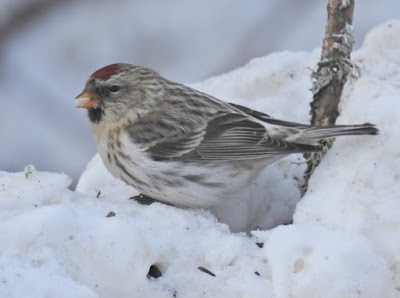
The Common Redpoll that I really wanted to be a Hoary. There's too much streaking on the flank, though 

Sunday was more of the same so I won't go into too many details. The same birds that I saw the prior day were in the same places, although at Warren Woessner Bog I had Black-billed Magpie on a deer ribcage. Friends of Sax Zim Bog does this really cool thing where they have deer rib cages set up near the feeders, which draws in magpies, ermine, and sometimes pine martens. I've never seen that before, and it was such an interesting way to bring in other animals.
Canada Jay

The best part of my trip was in the last hour of birding. I'm terrible at owling, and I had given up on seeing the Great Gray Owl. Only 2 groups had reported sightings in the weekend I was there, and they weren't very good looks. Oh well, even without the Great Gray I saw incredible birds. But I still drove up and down CR 7, scanning every tree in every clearing. I planned to do this for about an hour and a half, and for the first 45 minutes or so I saw nothing as the sun sank lower.

But ahead I saw a group forming on the side of the road. There are only 2 reasons for a group like that: a tour or an owl. I pulled over behind them and walked up. A guy excitedly told me that an owl had been seen but people lost it. This was my only shot, so I started scanning. I was casually pointed to a Northern Shrike at the top of a tree, the person clearly didn't know that was a lifer for me. I was so pumped because I'd missed this plenty of times, but I didn't have time to take a picture because the crowd erupted. I turned around to see the source, and my jaw hit the icy asphalt on the road. 
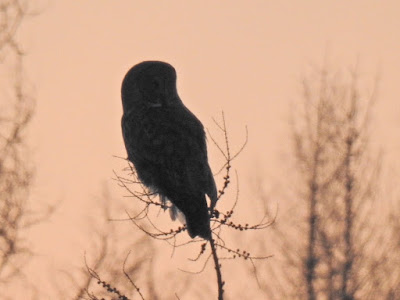
Great Gray Owl, bird of the trip

Up against an orange sky clear of clouds was the silhouette of a Great Gray Owl. It looked like something out of a National Geographic magazine. Towering at over 2 feet tall, this the largest North American owl, and their gray body makes them resemble a ghost. Seeing pictures of one does not do it justice, especially when it swoops low across the ground. It was extremely cooperative and stayed near the road for an extended amount of time. I pretty much stayed until you could only faintly see it in the twilight. It was one of the best birding experiences of my life, and the subzero temperatures became and afterthought as we gaped at the owl. Numb fingers aren't an issue when you're staring at a Great Gray Owl. 

The Sax Zim Bog exceeded the expectations that were set as a birding Mecca. I got 7 new lifers, and each one was as outstanding as the last. The bog is a perfect way to spend a weekend birding, and you'll get to see some of most sought after birds in the country. The weather, while cold, is very manageable and should not be a deterrence. This place seems like an outstanding summer spot as well, I will for sure be coming back multiple times in multiple seasons! Between this and the Spotted Rail, the birding travels have been outstanding. Who knows what March will bring? 
Canada Jay and Pine Grosbeak

Evening Grosbeaks at Mary Lou's feeders

Ecuador Part 1

I am shocked this trip happened. When Sydney was born, I expected about 2 years of not doing a birding focused trip, but I have a very suppo...