Friday, November 4, 2022

Singapore and Malaysia


Singapore has a reputation of being a great introduction to Asian birding. The city-state is actually a large island off of Peninsular Malaysia and is primarily well known as an economic hub akin to a city like Dubai. That reputation came at a cost, as a lot of awesome habitat, and animals that come with it, is gone. Despite that, there are some great spots and a state of the art public transportation system that make it really to get around and get familiar with different habitats.


After consulting with my companion for the week, the legendary Tom McKean, we also decided to gamble on Kuching, Malaysia as a second stop, in the state of Sarawak on Borneo. Sarawak is more economically developed, which means it has considerably weaker nature than Sabah, the other Malaysian state in Borneo, or Kalimantan, which is the Indonesian state that occupies Borneo. 


Probiscis Monkey

Sabah is home to legendary sites like Mt. Kinabalu, Sepilok, the Kinabatagan River, and the Danum Valley, but we did not have  enough to visit these places and do them justice. With only a few days, we opted for Kuching because it had some accessible sites right outside of town and neither of us had been to SE Asia before. It was either Kuching or Fraser’s Hill on the peninsula.

Crimson Sunbird
 

After a very late arrival, Tom and I slept in and got a late start to the morning at the Windsor Nature Park , where there is a canopy walk. The walk was closed for the day, but the trails below were still open. The humidity was unreal, but we still got great looks at Black-naped Oriole and and Olive-backed Sunbird. Sunbirds remind me of hummingbirds of the Americas, and I really wanted to see at least one, although my main target was Crimson Sunbird.


Black-naped Oriole

After a  rainy lunch at the Newton Food Centre we headed off towards the botanical gardens, which were pretty birdy late in the day. There were some major highlights, like Greater Racket-tailed Drongo, a Gray-headed Fish Eagle feeding on a fish in a tree, and a pack of Smooth-coated Otters chasing a water monitor lizard. I also got my first Crimson Sunbird of the trip!


Smooth-coated Otter


Chinese Fried Oysters

Our next leg started with a flight to Kuching, and we went to Kubah National Park the following morning. We arrived before they opened and killed some time by admiring a stunning Blue-throated Bee-eater. I found Kubah surprisingly not super birdy, but our pace was probably too fast. We also got into the forest, which made it much harder to observe birds. Tropical birding is TOUGH, and I think we would have been better served being on the road. 

Blue-throated Bee-eater
 

I jolted to a stop on the road at one point by a waterfall. My bird senses were tingling and even though the forest was quiet I felt like we had a good chance at seeing something. Sure enough a flash of red alerted to one of my top targets: Scarlet-rumped Trogon! Trogons are my favorite family of birds, and getting to see one made my day. It was at this point that we entered the forest saw little to know bird activity, although the scenery was incredible. On the way we also had a Crested Serpent Eagle soaring in the clouds. I was pumped to come back the next day!

Gray-headed Fish-Eagle
 

An ultimate highlight of the trip was later that night. Tom and I booked a sunset cruise to look for Probiscis Monkeys and Saltwater Crocodiles. But larger animals were not the only things out there. As we were driving 2 Rhinoceros Hornbills flew in the opposite direction. It was a quick view, but I was going nuts. I wasn’t expecting to see one, and it was the bird of the trip! Once we got on the boat Common Sandpipers were abundant in the low tide, and we got our first looks at Common Kingfisher that were quickly one upped by a Stork-billed Kingfisher with a bright orange bill. 


We slowed to a crawl as we scanned for monkeys, and within 5 minutes we got cooperative views of a large male. This was the nature highlight of my life. Probiscis Monkeys are all over National Geographic and are a staple of any show about rare or cool looking animals. Now we had one right in front of us. I was so slack-jawed that I outright ignored another Stork-billed Kingfisher. Probiscis Monkeys are extremely shy around people due to over hunting, but they do well on the coasts after Muslim traders converted coastal tribes hundreds of years ago. Eating monkey meat is haram, and therefore we are able to see them more on the coasts. 


What an unreal animal

We stopped seeing the monkeys around sunset, and at that point we switched to spotlighting for saltwater crocodiles. We wouldn’t see much more than eye shine, but the beasts were all over the water. It was a little unsettling due to the small size our boat and dock that looked like it was a strong wind away from being destroyed.


Gunung Santubong from the boat

Unfortunately the next day did not go as well. Rain caused Kubah to be closed, despite no rain at the lower levels of the park. Annoyingly there was no way of knowing until I got there, and by that point it was midmorning. In an effort to make something out of nothing, I ended up taking a boat ride to Bako where the rain was pouring. I got my first looks at Asian Fairy Bluebird and had the amazing experience of sitting 5 feet under a grazing Probiscis Monkey, but overall the weather made it very difficult.


Asian Fairy Bluebird. The humidity is what makes the pictures look hazy.

Our final place to stay in Borneo was the Permai Rainforest Resort. We stayed in a treehouse that made canopy birding very easy outside of the pouring rain. Still, there were some babblers and Common Ioras that were fun to look at. Permai was stunning, and our treehouse overlooked the South China Sea crashing against the rocks. The beach offered the best sunset I've ever seen. Tom and I went on a night hike to try to see if we chance upon any mammals and came up short, but that was first time I have tried to go mammaling so it was to be expected. We just liked being out there at dark. We did get something out of it, though. I looked up at the right time and saw a Sunda Scops Owl silently swoop by. That brief glance was breathtaking, and it has made me way more excited about future night excursions. The rain continued into our last day as well, although we got to see more Probiscis Monkeys and Silvered Langurs on our waterfall hike.
Silvered Langur


From a birding perspective I was crushed about Malaysia. We left a lot on the table, but it was out of our hands with the rain and park closures. If you're just birding, skip Kuching and focus on other areas of the island that can cater to birding better. But Kuching is still worth a visit. The food, culture, people and beaches were incredible. I am so glad that we got to experience the city. I fully intend on going back, whether that is Fraser's Hill or the Danum Valley. It was safe and English was widely spoken as well. There is no excuse to not go!

Sunda Giant Squirrel


I wound up only birding at one other place in Singapore, but I went both days. Sungei Buloh Wetland Reserve is on the edge of the country, about a 25 minute drive from Little India or an hour on the MRT. This little reserve has amazing birding and other really cool animals, like fruit bats, snakes, and crocodiles. Walking in I had the bird of the trip: Buffy Fish-Owl. This sighting was extra special because I read Owls of the Eastern Ice earlier this year and learned about them. Local birders were casual about it but I was buzzing. The visitor center has a colony of fruit bats underneath the pavilion that were extremely cooperative, and my mind was torn away from them to see a Scarlet-backed Flowerpecker.

Buffy Fish-Owl

One of the cooler bird experiences of the trip was walking around the boardwalks and stumbling on a Pink-necked Green-Pigeon sitting on a branch. These birds are ridiculously common in Singapore, but the vibrant colors reminded me of why I came here. I wanted to venture to Asia or the South Pacific partially because of the fruit doves I saw in field guides and partly for the parrots and kingfishers. We equate pigeons to being boring, bland, and brown. Not all are like that. I also got up close to Collared Kingfishers, another thing that drew me over here. The kingfisher of the trip was a White-throated that I saw on the way to Sungei Buloh and unfortunately couldn't photograph. Shorebird migration was also popping off at the wetlands, and I got great looks at Intermediate and Little Egrets, Purple and Gray Herons, and Common Redshanks. Getting to watch a fishing White-bellied Sea-Eagle was also fascinating. All of this was happening in one of the most metropolitan areas of the world!

Pink-necked Green-pigeon


Collared Kingfisher
I tried, and failed to find a Mangrove Pit Viper, but I was undoubtedly looking in the wrong place. I got caught in a torrential but brief downpour as well on a bridge, and during that time a 12 foot long crocodile emerged in the river below me! This was yet another moment of the trip that was dumbfounding at nature that exists on this planet. 


Saltwater Crocodile

There was one final place that I had to get to. With little phone battery I tried to take the 2 hour MRT journey from the northwest side of the island, Sungei Buloh, to Pasir Ris Park on the southeast side of the island to look for Oriental Pied Hornbill. I had no clue where to find them, but eventually I asked around enough to get to a spot where I might find one. Sure enough, high up in a tree there were 2! The birds flew from tree to tree for about half an hour. After logistical nightmares and rain, here I was staring at a hornbill, the bird I wanted to see most. It was a fitting end to a fantastic trip.
Oriental Pied Hornbill


This trip was well worth it. The company was amazing, the birds were great, and SE Asia is a region I cannot wait to get back to. This was a trip that I learned a lot on. Foreign birding adds a layer of challenges, and the weather was a lot to contend with, but now that I know what to expect I can better prepare for it. While I did not see a ton of birds, the quality of hornbills, sunbirds, and owls was clearly there. The nature in general crushed expectations. The hikes were stunning, and the mammals and reptiles made up for any birding misses. Singapore is a great place to fly into and the food scene was great, but it is only worth a day or two. Unless I was using it as a connection to somewhere else (which it is really great for) I don't think I would go back, but that is more of testament to how amazing the region is. I could spend a month in Kuching, and that was definitely the better city between the two. As I wrap this up after months of writing this, I can't help but dream of the next SE Asian destination. 

The best sunset ever


BBQ Stingray

Wednesday, April 27, 2022

Reconnecting with the Local Birds at Harry Moss Park


I started really getting into birding about 7 years ago, and since then the way I've birded has changed a lot. I used to stop for every cardinal, now I usually pay minimal attention to them. In college I had 2 patches, and in Dallas I had 2 patches. Spending a day on the Texas coast was a monumental endeavor, now a trip to Central America is easy. My Nat Geo field guide was all I read, now my bookshelf is running out of room with field guides from Chile to India and everywhere in between. 

Coming home and looking through a field guide to the "Birds of (insert far flung place here" can make you forget about the birds that made you fall in love with birding in the first place. Fortunately for me that changed when I went back to Harry Moss Park.

Eastern Bluebird

Migration is in its earliest stages here so no warblers would be seen, but I just wanted to get out. It was the pefect time of  year to do so. One day the trees are empty, the next day they are bright green and full of leaves and birds. The weather was neither cold nor hot and there wasn't a cloud in the sky. 

The first bird that caught my eye was a Blue Jay. This is another bird I can sometimes walk past, but this time I stopped and looked. The bright blue contrasting with the black collar was stunning. The crest and barred tail add eye popping detail. I was stunned. In that moment I remembered how I always encourage people to bird tropical areas to see all the color, and I realized we have plenty of color here. Believe it or not, people will travel here to see Blue Jays.

A well hidden Blue-gray Gnatcatcher
As I walked into the woods I was thrown off by how green it was. White-throated Sparrows were singing and Cardinals were whizzing by. It was almost sensory overload. Who have I become by getting mesmerized by a Cardinal? As I continued I heard the whizz of a Blue-gray Gnatcatcher. Small, hidden, and not visually significant, I found myself searching through this bush to get a better look.

Stopping at the creek I had another treat: American Goldfinches in breeding plumage. Usually I only get to see them in their less appealing winter plumage. This time I got to see the reason why they are called goldfinches. A small flock of bright gold birds zipping across the creek is definitely a walk stopper. The last big at the spot was a swimming male Wood Duck.

Wood Duck

As I wrapped up my walk I found myself a little disappointed I didn't see bluebirds, but in the parking lot I got both a male and female Eastern Bluebird! The sunlight hit their deep blue plumage perfectly. My last few trips have been canceled due to Covid and weather, and I'm itching to get out of town. As I sit here planning my 2022 trips, I realized that I forgot how colorful and stunning the local birds are. It's going to be a great migration!


Friday, February 18, 2022

Guadalupe Mountains National Park

 I’ve been all over the state birding, except for one place: Guadalupe Mountains National Park. It’s one of the least visited parks in the country, and for reasons that aren’t it’s fault. It’s very isolated and there are no restaurants nearby, no showers, and the weather is not favorable for half the year due to crazy amounts of cold and wind. It’s not as popular as it’s neighbors Carlsbad Caverns or Big Bend, but it should be. 

Spotted Towhee

Making the effort to get out there is very rewarding from a birding perspective. The higher reaches of the Guadalupe Mountains offer unique habitat that can’t be found anywhere else in Texas. High elevation pine forest is scarce outside of the Davis and Chisos Mountains, but the Guads are more similar and closer to the Rockies. In fact, most of the tallest peaks in Texas are in the Guadalupe Mountains. As a result you get some birds that you can’t find in the other two. For example, this is the only place in Texas you can find Pygmy Nuthatch, and one of two places for Mountain Chickadee and Steller’s Jay (high up in the Davis Mountains is the other place).


I always have a top 5 of ABA and Texas birds that I want to tick, and the Guads had some of those. My top 5 for Texas was Williamson’s Sapsucker, Lewis’s Woodpecker, Mountain Chickadee, Pygmy Nuthatch, and Crimson-collared Grosbeak. 


My flight from El Paso arrived Friday night and I made the drive towards the Guads. Temps were dropping below freezing and wind gusts were 25+ mph. The nightly low ended up being 19° not including wind chill. I checked in at the ranger station and got my bearings. Starting at Frijole Ranch I did the Smith Spring loop. For the sake of length I’ll skim over this, but it’s a gorgeous trail and pretty easy. The wind was awful which kept the birds down. After that I hustled to Rattlesnake Springs just across the New Mexico to try for Blue Mockingbird, but no dice. That sucked, a definite brief low point of the trip. In hindsight I should have focused on McKittrick Canyon, that’s the spot to bird. Oh well.

Canyon Towhee


On to the really fun stuff. The Bowl is that area of pine forest that is so hard to find in Texas. Most people come to hike Guadalupe Peak, I came for the Bowl. Unfortunately it’s about 9 miles round trip and you gain 2,500 feet of elevation in 3 miles. It’s harder than the Colima hike. Side note: follow the wash to the frijole trail, I got confused but follow the Tejas Trail north. Anyways, the route I took up was Bear Canyon, the more direct, but steeper route. It took me about 2 hours and I saw no birds due to the insane wind. No worries, I was focused on just getting up. There’s a reason there are so few eBird checklists, especially in the winter, for the Bowl. But that’s why I decided to go in January.


View from The Bowl

My heart sank when I got to the top. The wind was worse than on Bear Canyon. I had the foresight to wear my light jacket and stuff my down sweater in my backpack, along with a balaclava and gloves. I was pouring sweat, but the wind and altitude cooled me off quickly and I needed both as layers for a chunk of the hike.


Way at the top is where the picture above this was taken

The birding was nonexistent for most of the hike due to the wind. I saw a flash of red at one point, which suggests Cassin’s Finch, but I couldn’t be sure. Still, the Bowl is enchanting. The tall pines do not feel like Texas, and despite no birds I didn’t want to leave. I could have spent all day up there, and I was the only person that made the hike that day.


This was the first time I’ve birded where I truly felt isolated. I was by myself in the mountains in the winter. Me, the bears, and the mountain lions. The feeling of being the only human up there is exhilarating. I resigned myself to not seeing any birds, which wasn’t that hard. The hike was worth it even if I didn’t see a single bird, which I didn’t until I reached an area that blocked the wind. 

Red-naped Sapsucker 


A Red-naped Sapsucker was the first identifiable bird I saw…an hour into the hike. It was a lifer, and one of the birds I came here to look for.  But what followed it up had me on the verge of tears. Another woodpecker started loudly calling and dropped. No way, a gorgeous male WILLIAMSON’S SAPSUCKER! 


Irregular in the Trans-Pecos in winter according to Nat Geo’s field guide, you have your work cut out to see one. The TOS handbook says that they are an annual visitor in very small numbers to West Texas. I dreamed of seeing one, but didn’t expect to. He was super cooperative and really allowed me to soak it in. To see it on a clear day in perfect habitat is indescribable.

Williamson's Sapsucker

I was high. This is why I’m a birder. The rush of the hike combined with the birds tipped me over the edge. This wasn’t some backyard feeder watching, “look at my redbirds” bullshit. This is the type of  birding that I want my friends to experience with me. It’s impossible to experience a moment like that and not love birds.


But I wasn’t done. A mixed flock turned up lots of usual suspects with a few Mountain Chickadees sprinkled in. Not a lifer, but a Texas lifer! No Pygmy Nuthatch, but honestly I ain’t even worried. I’m doing the Bowl again, maybe even later this year. 


Mountain Chickadee

Hiking down I paid no attention to birds because one false move was sending me down the mountain. Including early confusion, it took me about 2 hours to go up each way up and down, and I spent probably 3 hours in the Bowl itself, which is a pretty level trail minus one small part. 7 hours total to do about 9 miles, not bad. Next time I want to backcountry camp to spend even more time up there.
A surprisingly cooperative Sharp-shinned Hawk


I spent my last day in El Paso camping at Franklin Mountains. Overall a great park, the nature trail was productive and the Aztec caves were a great hike. I was able to add Green-tailed Towhee to my life list and Gambel’s Quail to my state list. 


Green-tailed Towhee
I spent my afternoon chasing Lewis’s Woodpecker at the El Paso Country Club. Finding one in Texas is a hard thing to do, and I somehow saw 2! My reaction is a little more muted because I saw it on a golf course and didn’t get great looks or photos. Nevertheless, I am HYPED to see one. 
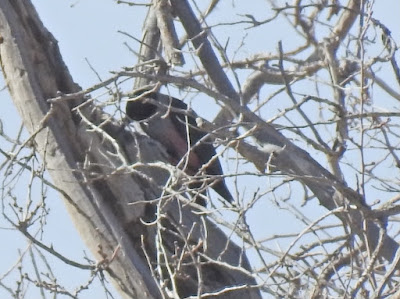

Lewis's Woodpecker

The waning moments of my trip brought me to Rafa’s Burritos, which was 2 feet in length. Verdict: it slapped. Second best burrito after Roberto’s in San Diego. I wandered to Aguacaste Park literally along the border wall to work on my El Paso county list, where I may have gotten Greater Scaup but that is pending some photo reviews. By that point it was 3:30, time to head to airport and head home! To get 1 out of my top 5 is a good trip, 3 of 5 is mind boggling.

Texas Antelope Squirrel


I had high expectations for Guadalupe Mountains and I was still blown away. Birder or not, get there. It’s easily a three day trip between McKittrick Canyon, the Bowl, and Guadalupe Peak. I am really kicking myself for not doing McKittrick Canyon. You can even combine it with a trip to Carlsbad Caverns an hour up the road. The Guads having as little visitation as it has is honestly a crime, but it does give you some solitude that you can’t find at other parks. If you go, take me with you. I’m still digesting the experience, but it may be better than Boot Canyon. I’m not sure, the high hasn’t worn off yet. 

Black-throated Sparrow


Cold weather, high winds, it doesn’t matter. The challenges combined with the birds will make you feel more alive than you’ll ever feel. 

Tuesday, January 25, 2022

Spain: Malaga and Granada

You can’t go to a foreign country and not go birding. With a full week in Andalusia in southern Spain, poor Christina was bound to get dragged off birding. Shockingly, this was not a birding trip. We just wanted to go see the sights and mostly stick to the cities. After flying to Madrid we immediately took a train to Seville, then Malaga, then Granada before flying out of Madrid. We did no birding in Seville, but walking around the city I was able to ID a Black Redstart and a few others that we would see later on like Great Tit, European Robin, and European Blackbird. 
Eureopean Goldfinch

One city that caught my attention during the stages was Málaga, a beach city along the Mediterranean. The home of Pablo Picasso, it had a museum of his work and a cool cathedral, but it also had one of the better, if not the best, urban birding sites in Spain: Parque del Guadalhorce. It’s worth mentioning we did this trip without renting a car, which gave us limited options. 

European Stonechat

The park is at the mouth of the Guadalhorce River as it empties into the Mediterranean. It’s a small protected area home to the endangered White-headed Duck. It may be small, but it packs a serious punch. Getting here is tricky by cab, so we went to the stadium by the park and walked from there. The park itself is connected to a larger trail that is popular by runners and bikers, but walking this paved trail is very productive. 

White Wagtail

We were greeted by Common Moorhens and Black-winged Stilts, and despite very windy conditions we were still able to have a very productive day. White Wagtails kept us entertained along the canal, and a large bird with its head in the water caught our attention. I initially thought it was Eurasian Spoonbill, but it was even better. It was a Greater Flamingo! Yes, you can find native flamingos in Europe! 

Greater Flamingo

Birds kept rolling in like the stunning European Stonechat, some fast gliding European Crag Martins, and skulking Common Chiffchaffs. We also had a Crested Lark, and a flock of European Siskins. All of this was before we even got to the main park! Before walking into the park we startled a flock of European Goldfinches, a big target of mine. Once we got in we made our way to a blind that doubled as a wind tunnel. In the howling wind we scanned the pond and got excited to see Little Grebe and European Coot, which marks the first time in years that I’ve been hyped to see a coot. But my main target was sitting in the back: White-headed Duck! It’s an endangered species, which adds to the experience. 
White-headed Duck

 There’s a blind closer to the beach along a larger pond that was teeming with bird activity. There were more flamingos, but lifers were turning up everywhere, like Common Shelduck, Common-ringed Plover, and Pied Avocet. On our way out we even got a Bluethroat! 

Common Shelduck

But the birding wasn’t over. Granada is in the foothills of the Sierra Nevada and snow capped peaks were ever present. Before we toured the Alhambra we toured the trails Generalife, the summer home of Moorish kings. Different habitat meant different birds, and we quickly had Common Wood-Pigeon and Eurasian Magpie. 
Common Wood-pigeon

Overall the morning was slow, but the trails on the mountain gave us great looks into the tops of trees below us. As a result we got great looks at Long-tailed Tit, Short-toed Treecreeper, and Great Tit. We gained a lot of elevation but the trail was smooth and didn’t feel like it at all. Coming back down saw an increased amount of bird activity, the loudest and most numerous of which was a flock of Iberian Magpies. They were everywhere, and a few Eurasian Jays were sprinkled in! Flocks of Spotless and European Starlings were in the olive grove, and we were treated to great looks of Meadow Pipit and European Robin to cap it off! 
Eurasian Magpie

I wish we had more time to spend birding, but 2 half days was more than good enough. Obviously Christina deserves a massive shoutout for being a very enthusiastic and patient birding buddy. Both Malaga and Granada are great places to cram in some birding time when visiting Europe!

Iberian Magpies

Friday, October 29, 2021

Talamanca Highlands in Savegre, Costa Rica

After a few days sweating it out in the jungle, it was time to ascend to the Cordillera Talamanca to new habitat, new birds, and hopefully lower temperatures. The cloud forest would have few, if any birds that I saw at La Selva. I stayed at the Savegre Hotel towards the bottom of the Savegre Valley in a town called San Gerardo de Dota, which is a tiny mountain town. The main draw is the Resplendent Quetzal, a revered bird in both current and past Latin American cultures. It is associated with the snake god, Quetzalcoatl, in Mesoamerican mythology and it is very easy to see why with its iridescent green back and up to 20 foot long tail feathers. But there are other draws to the area, both avian and non-avian. There are hikes to waterfalls, a flowing river, and world class trout fishing. Cramming everything into 2.5 days would be tough.

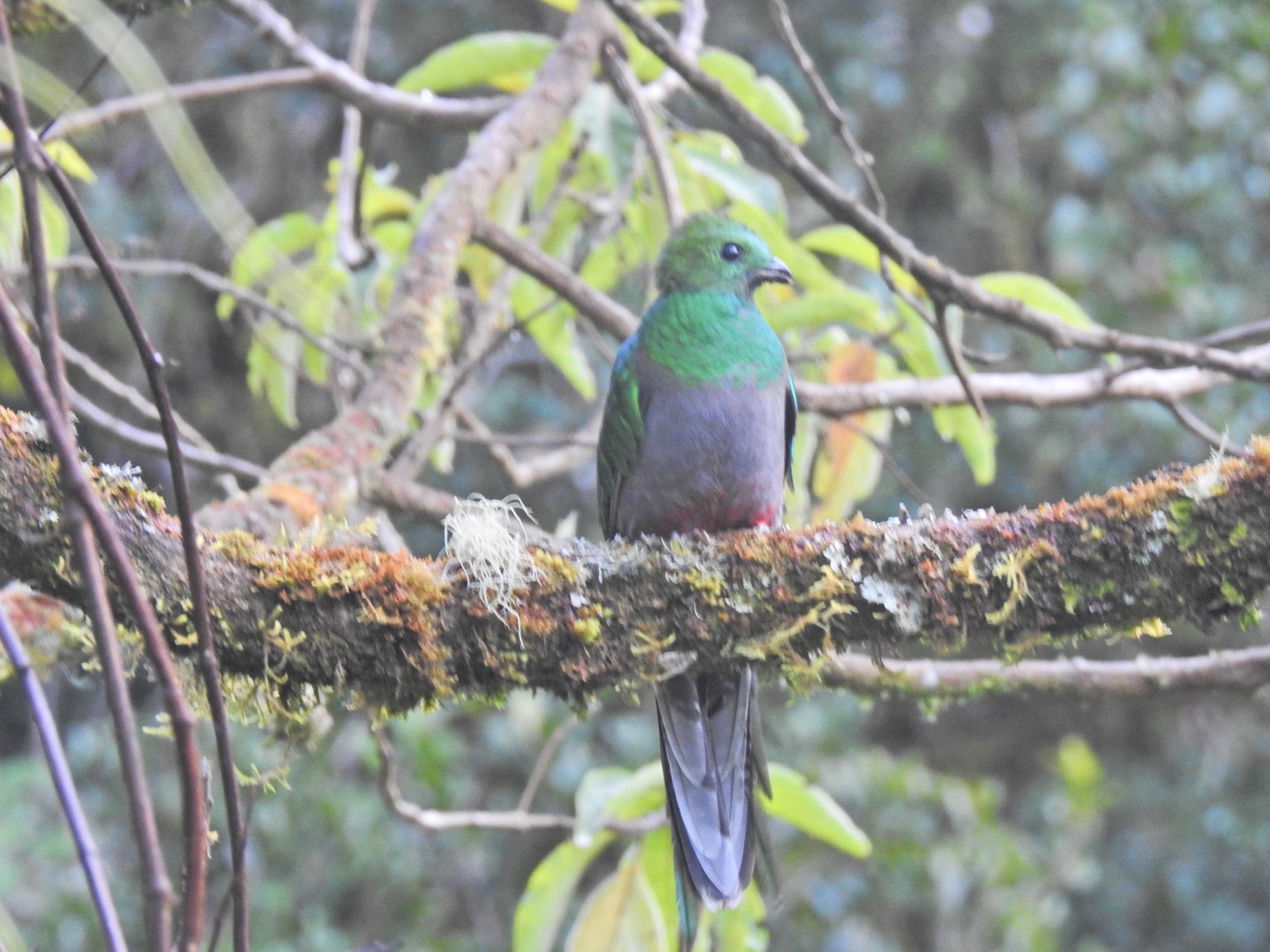
Female Resplendent Quetzal

I got a tip to stop at Miriam's feeders higher up in the valley. This restaurant had both amazing food and a great feeder setup. Sitting outside I quickly got Rufous-collared Sparrow, Flame-colored Tanager, and Acorn Woodpeckers. Talamanca Hummingbirds buzzed everywhere, and in my red shirt I even had a few get inches from my face. A flash of green revealed another sought after species: Northern Emerald Toucanet, causing my jaw to nearly hit the floor. But it somehow was not the star of the show. There was only one bird that could top that, and it made the whole trip worth it. Quetzal. That's right, I had a quetzal fly by just long enough for me to get a view of it. It was gone in an exhilarating flash, but I could not get over it. I was very lucky, of course I wanted to see more and get longer looks, but now I didn't have to worry about missing it and I could focus on seeing the other species in the area. Here's something crazy: Flame-colored Tanager is one of my most sought after ABA birds and I had been dying to see one. It's insane to think that I saw one and it was nothing more than a mention.

Flame-colored Tanager

Flame-coloreds were all over Savegre, which didn't make them any less stunning. Upon arriving at the hotel I walked past a hummingbird feeder full of a smattering of species. Talamanacas dominated, but there were also White-throated Mountain-gems, Lesser Violetears, and Stripe-tailed Hummingbirds. It was the perfect setup for the next few days.

Lesser Violetear (L) and Talamanca Hummingbird (R)

I had a guide for the next two days, Raul Fernandez, who worked for the Savegre Hotel. I can't recommend him enough. He knew the area really well and taught me a ton, but he made me identify everything and only pointed things out that I was going to miss. Fortunately I pretty much self found everything that we saw together so I don't feel like I cheated. There are fewer bird species in this area of the country, but I think I have to give it the edge over Savegre.

Collared Redstart

We were out at sunrise as a flock of Sulphur-winged Parakeets flew over, being our good omen for the day. The hotel maintains a garden that is very good for hummingbirds, and as Slaty Flowerpiercers worked the flowers we got on of my goal birds for the stay: Fiery-throated Hummingbird. 

Silver-throated Tanager

The steepness of the terrain means there is a variety of species as you reach different elevations, and the trails at the hotel ascended enough for us to get a taste of everything. We found another mixed flock of what seemed like just Sooty-capped Chlorospringus, but it turned into much more. First it was Large-footed Finch. Then it was a Flame-throated Warbler, and it just kept getting better. Collared Redstarts reinforced my love of Redstarts as a group. Then we had a Spangle-cheeked Tanager! This was my #2 behind the quetzal. The tanagers in the tropics destroy even the Scarlet-tanagers of the ABA, and this is a prime example. 

Spangle-cheeked Tanager

As we climbed we got Black-cheeked Warbler and Spotted Woodcreeper, and on the trail to the mirador we hunted for Spotted Wood-quail and Silvery-fronted Tapaculo. Both would be tough to get. We got a flock of the former, which was very cooperative, but only heard the latter. At this point it started raining, as it does in the cloud forest during the rainy season so we had to head in.

Spotted Wood-quail


I had the rest of the day to explore the town, so I did the 2 mile hike through PN Los Quetzales to the waterfalls that Raul advised against. I stupidly didn't listen. The trail is in rough shape past the first waterfall and I should not have hiked it, but I did. There were beautiful scenes and I'm glad I did, but there was a rickety bridge and steep stairs that were partially washed out. On the bright side, I did get Torrent Tyrannulet. There were some serene moments along the stunning river, but you don't care about those, you care about the birds.

Savegre River

After a delicious trout burger and an early bed time I got up even earlier to go higher up the mountains with Raul. Our quarry was Wrenthrush and more looks at quetzals. Wrenthrush is super hard to see, they dart around dense foliage, but we were able to get amazing looks at a few of them. Then we dropped down a little bit to distant looks at female quetzals, eventually getting one within 30 feet of us! Quetzals aren't an uncommon bird in Savegre, so we expected to see more, but that doesn't make it any less special to get to experience one. 

Immature male Resplendent Quetzal

Another male. They are starting to grow their tails that can get to 21 feet long!

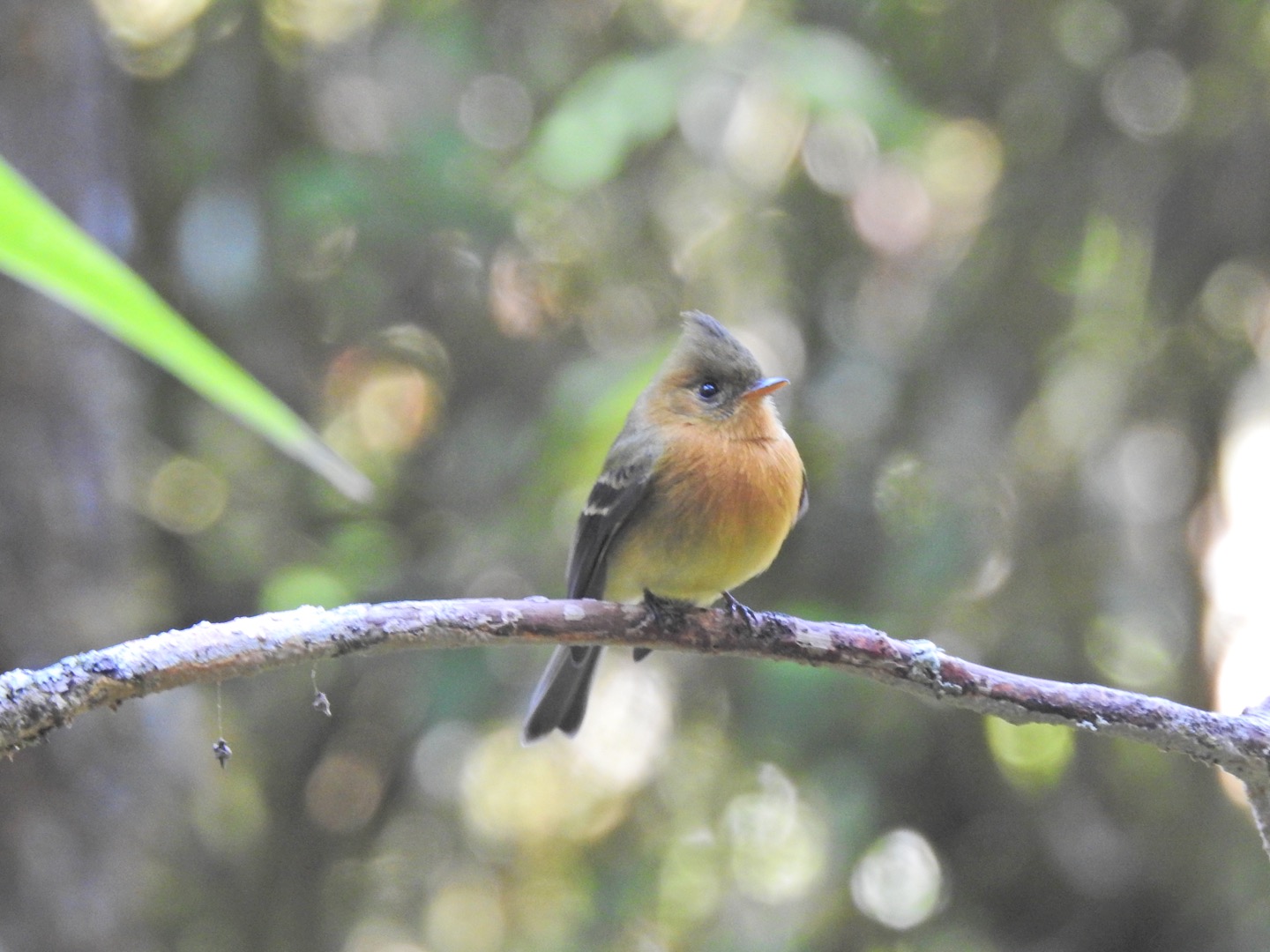
We reached a clearing that ended up giving even better looks at quetzals darting between the trees, and these were males with longer tails! We spent an extra hour looking at them they were so stunning. But that's every bird in Savegre. I tend to blow by certain birds at home like cardinals and mockingbirds because they're so common, but even the common, or less visually appealing birds like Tufted Flycatcher, and birds that are so awesome you have to stop for them. 

Tufted Flycatcher

We stopped a curve in the road at a higher altitude and were able to get Black Guan, another sought after bird, as well as Mountain Elaenia, Sooty Thrush, Barred Becard, and Collared Trogon. On our way back down we stopped for Yellow-bellied Siskin, a subspecies of American Dipper, and Blue-and-white Swallow. The rest of the day and final morning was spent walking the trails at Savegre by myself. I was able to self find more quetzals and Green-crowned Brilliant, as well soaking up the cloud forest in the morning sunlight. 

Collared Trogon

Black Guan

Leaving Savegre was really hard. This was a packed week of birding, but it was a blast. Costa Rica is a gorgeous country and super easy to get around in. I heard coming into it that the food was lackluster, which is one of the biggest lies I've ever been told. Usually at the end of trips I am ready to get home, but I could really go for a trout burger or a Tico breakfast right now. My life list got a lot longer as well, I had 140 species while I was down there, 121 of which were lifers. I only scratched the surface of the country, and I will be going back as soon as I can.

The cloud forest

Ecuador Part 1

I am shocked this trip happened. When Sydney was born, I expected about 2 years of not doing a birding focused trip, but I have a very suppo...